
Exhuming the Peppered Mummy
A friend of mine tells me that the only things he remembers about evolution from his high school biology course are photos of black and white peppered moths resting on light and dark tree trunks. They were presented as the classic case of Darwinian evolution in action, explaining how a trait that enhances survival could be acquired through an unguided Read More ›
Is Antibiotic Resistance Evidence for Darwinian Evolution?
On this episode of ID The Future we’re featuring the audio of a short video segment from the Icons of Evolution curriculum modules DVD. Antibiotic resistance is an example of natural selection acting on random mutation and is often referred to as one of the hallmark pieces of evidence for Darwin’s theory of evolution. Is it truly strong evidence supporting Read More ›
National Geographic Ignores the Flaws IN Darwin’s Theory

Institute Supports Accurate Science
When students study Darwin’s theory of evolution, should they learn only about its strengths, or should they also hear about its weaknesses? And should they learn about the best current evidence for evolution, or should they study outdated examples that have been discredited by the scientific community? Those are the real issues Discovery Institute has raised with the Texas State Read More ›
Alan Gishlick and the NCSE
Critics Rave Over Icons of Evolution
When my book Icons of Evolution was published in 2000, critics greeted it with rave reviews. I have been truly amazed at the outpouring of warmth from some of my fellow scientists, who have been trying to outdo each other in the superlatives they bestow on my work. In my case, however, “rave review” doesn’t mean extravagant praise, but wild Read More ›

Moth-eaten Statistics
British statesman Benjamin Disraeli is reputed to have said that there are “lies, damn lies, and statistics.” Statistics based on unbiased samples and rigorous analyses can point us in the direction of the truth; but statistics can also be unscrupulously manipulated to “prove” things that are patently untrue. Brown University biology professor Kenneth R. Miller demonstrates the latter in his Read More ›

There You Go Again
The believers in Darwinian evolution who currently dominate our educational establishment think that all students — even those headed for careers in auto mechanics or real estate — should believe, as they do, that all of us are descended from ape-like creatures through genetic accidents and survival of the fittest. Promoters of this doctrine have recently been urging the Ohio State Read More ›

Inherit The Spin
A year ago, I posted “Ten Questions To Ask Your Biology Teacher About Evolution.” On November 28, 2001, The National Center for Science Education (NCSE) posted its answers to my questions. According to the NCSE, many of the claims in my questions “are incorrect or misleading,” and they are “intended only to create unwarranted doubts in students’ minds about the Read More ›
Icons of Evolution
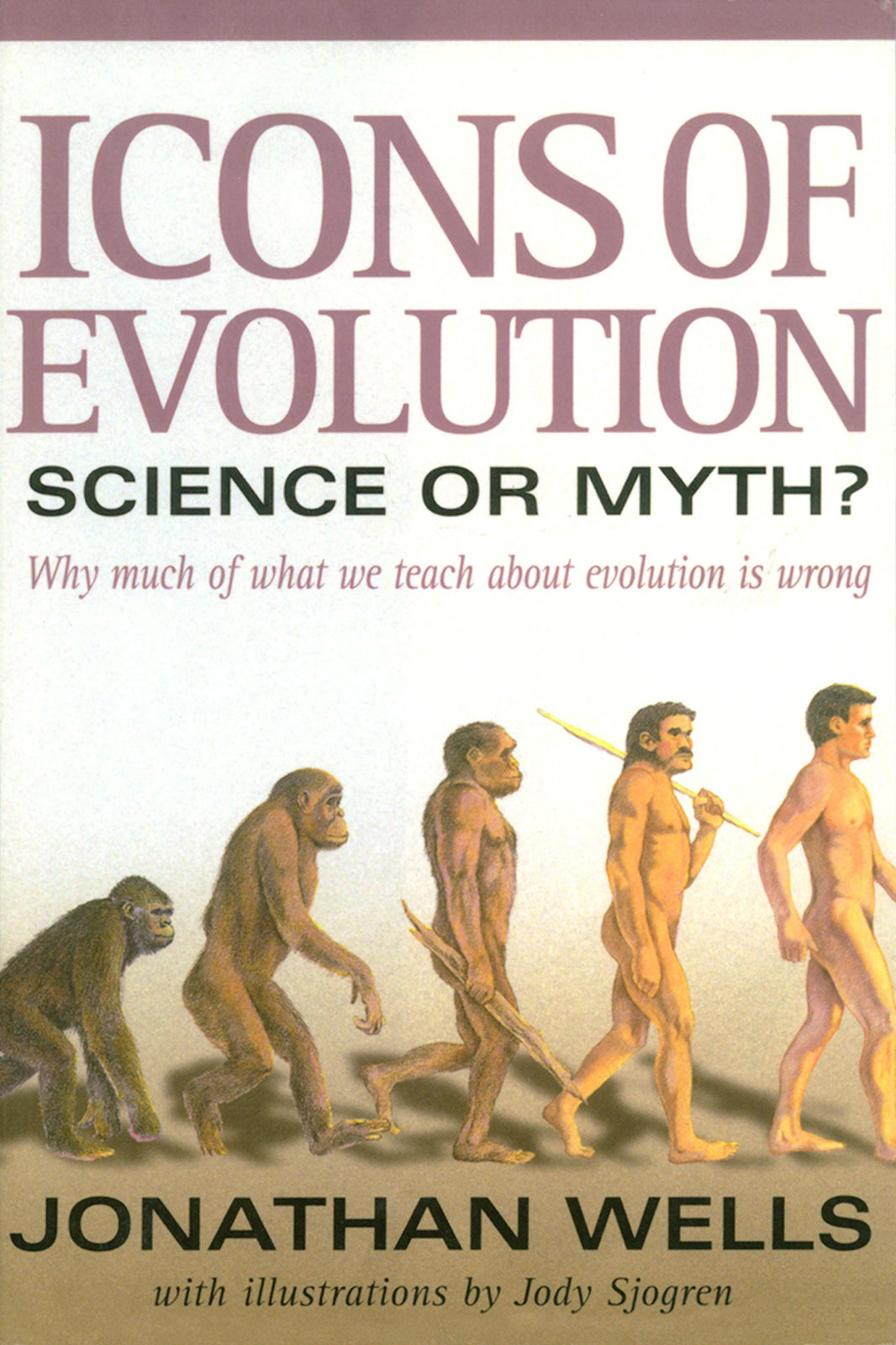
Authored by developmental biologist and Senior Discovery Fellow Jonathan Wells, this book takes aim at 10 common “icons” used to bolster Darwin’s theory in widely used biology textbooks. The “icons” commonly cited to support evolution in textbooks turn out to be scientific urban legends, long-refuted fakes, or misrepresentations of the scientific data. One of the most famous “icons” discussed is Read More ›