
The Bottom Line The Education Department Is Shrinking
Originally published at The Wall Street JournalThe U.S. Department of Education has spent more than $3 trillion since 1980, with little to show for it. Reading and math scores have barely budged, achievement gaps remain, and too many families are trapped in a system that fails their children.
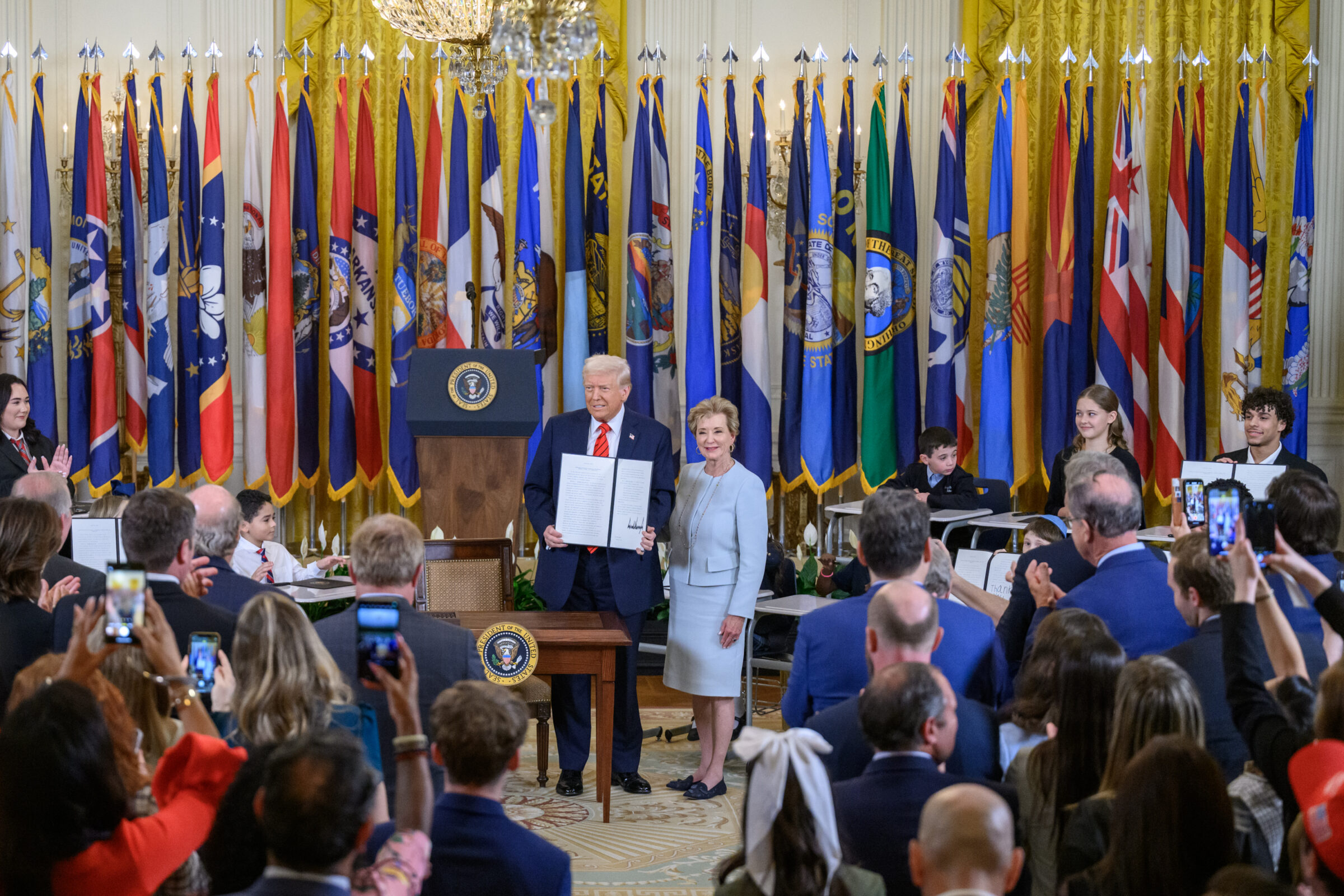
On March 20, 2025, President Trump took decisive action by signing an executive order directing Education Secretary Linda McMahon to dismantle the department and return authority to the states.
A year later, the results are striking. The department has overhauled operations — cutting nearly half its staff, reducing administrative layers, and consolidating offices. Grants have been streamlined, programs merged, reporting reduced, and oversight of the $1.6 trillion student-loan portfolio shifted to a more capable agency.
Critics predicted chaos. One year later, the opposite is occurring. The federal footprint is shrinking, states are innovating, and parents are reclaiming a voice in their children’s education.
Keri D. Ingraham
Programs tied to ideological mandates have been eliminated, ensuring that federal dollars go to academic learning, not political agendas. The department reports that $2 billion in wasteful spending has been cut.
Last July the department invited state leaders to request waivers from burdensome regulations. Collaboration between the Education and Labor departments has strengthened career and technical education, helping students connect classroom learning with real-world opportunities.
States now have the flexibility to tailor career programs to local needs, expand apprenticeships, and equip students with the skills for high-demand careers. Initiatives like the $15 million Connecting Talent to Opportunity Challenge encourage the development of statewide talent marketplaces to break down silos among students, training providers and employers.
The department has added $500 million for charter schools, expanded choice for students in unsafe schools, and championed the Education Freedom Tax Credit, which takes effect in 2027 and has 28 states opting in.
Together, these reforms signal a new direction, with federal programs refocused on their core mission: supporting students and parents. The federal government’s outsize role in education, which is relatively recent, has proved an astronomically expensive failed experiment.
Despite fear-mongering from teachers unions and progressive policymakers, dismantling the department hasn’t caused students to be abandoned or essential services to be eliminated. Programs supporting low-income students, students with disabilities, and those relying on college financial aid have continued uninterrupted.
As Ms. McMahon has explained, returning education to the states doesn’t end federal support. It discontinues centralized micromanagement of what has always been primarily a state and local responsibility.
Critics predicted chaos. One year later, the opposite is occurring. The federal footprint is shrinking, states are innovating, and parents are reclaiming a voice in their children’s education. What once seemed unlikely is quickly becoming a reality.