
The Bottom Line Trump Administration Taps Treasury to Fix Student Loan Failures
Originally published at Real Clear EducationFor decades, the Department of Education has operated the federal student loan system on autopilot, continually expanding its size, complexity, and cost. The result is a $1.7 trillion portfolio — nearly twice the size of all university endowments combined and larger than JPMorgan Chase’s loan portfolio, the nation’s largest bank — yet it operates without the financial expertise, transparency, or accountability a system of this scale requires.
The Department of Education reports that fewer than 40 percent of borrowers are in repayment, and nearly a quarter of borrowers are in default. While not designed to function as a bank, the Department of Education has been managing what is effectively the fifth-largest financial institution in the United States.
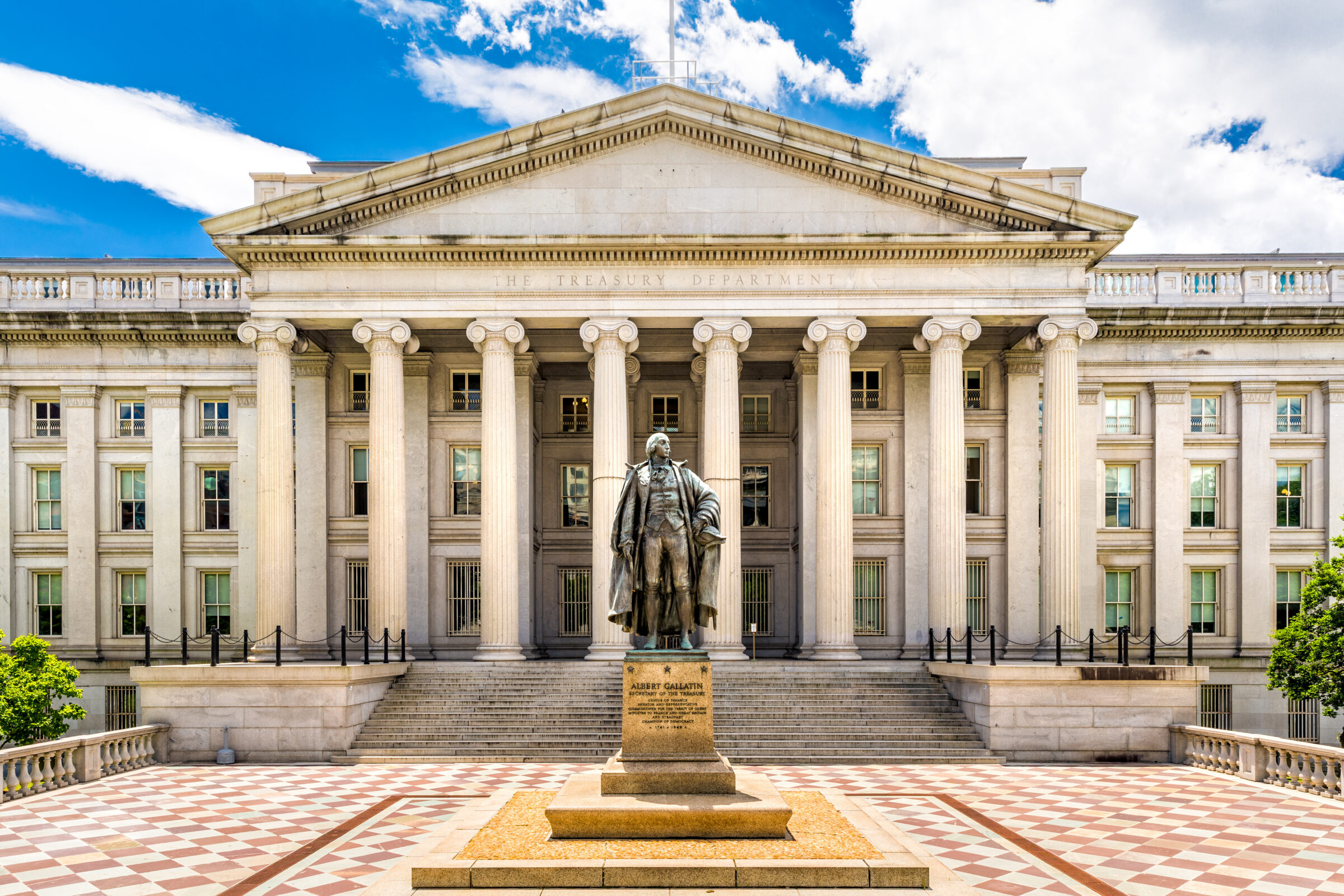
A course correction is long overdue. Recently, the Department of Education and the Department of the Treasury announced a Federal Student Assistance Partnership that begins the much-needed overhaul to better serve taxpayers and borrowers alike. The interagency agreement has the Department of Education procuring the services of the Department of the Treasury to manage student loans.
At its core, the agreement is designed to “enhance the administration of federal student assistance programs, mitigate the continuing fallout and cost to taxpayers from the Biden Administration’s mismanagement of the federal student loan portfolio, and facilitate the return of defaulted borrowers to repayment.”
The move marks a fundamental shift from failure to competent management by pairing responsibility with the necessary financial expertise. Treasury has spent centuries managing complex financial systems, collecting debt, and overseeing large-scale fiscal operations.
The move marks a fundamental shift from failure to competent management by pairing responsibility with the necessary financial expertise. Treasury has spent centuries managing complex financial systems, collecting debt, and overseeing large-scale fiscal operations.
Keri D. Ingraham
As Treasury Secretary Scott Bessent said, “Treasury has the unique experience, the operational capability, and the financial expertise to bring long overdue financial discipline to the program and be better stewards of taxpayer dollars.”
Under the agreement, the Treasury will immediately assume responsibility for collecting defaulted student loans and helping borrowers return to repayment. As the partnership evolves, the Department of the Treasury’s role will extend across more of the portfolio, while the Department of Education retains its statutory authority over policy. It’s a common-sense, logical correction to a failure that has been ignored for far too long.
Education Secretary Linda McMahon described the effort as “an international and historic step toward breaking up the Federal education bureaucracy and dramatically improving the administration of Federal student aid programs.” She is right. For far too long, reform efforts have ignored the real problem, making minor tweaks while the federal student loan system’s core failures grew worse. This is different, as it confronts the system’s long-ignored failures and establishes clarity and accountability that borrowers and taxpayers have been denied for decades.
Importantly, this partnership is being implemented with stability in mind. Existing systems, including the FAFSA, loan servicing, and federal data infrastructure, will remain in place. Borrowers will continue working with their services and are not required to take additional action. But going forward, they can expect clarity, consistency, and a system that functions competently.
Instead of building a system that helped borrowers understand and meet their obligations, the Biden Administration lied to the American people to win and gain political support. It pursued “unlawful repayment and forgiveness schemes that shifted debt to taxpayers,” fostering the impression that loans might never have to be repaid.
Not only is it wrong to push the debt of college expenses of others onto hardworking Americans who choose not to go to college, pay off their loans, or did not take on student debt in the first place, but it’s illegal to cancel a legally binding financial agreement that a borrower entered and committed to repay willingly.
As a result of the charade, borrowers were left in limbo, unsure of what they owed or when payments were due. The system grew increasingly unstable, and when empty promises collided with reality, public distrust deepened.
In a March 19 letter to American students, families, and borrowers, Secretary McMahon communicated candidly that the Department of Education is “not an efficient issuer of new loans.” As an example, she explained how the Biden Administration “botched the FAFSA form that, for months on end, not a single student could apply for aid.” Families were left scrambling at one of the most consequential moments in their financial lives — preparing to see if they could afford to send their son or daughter to college.
Furthermore, for decades, the Department of Education has done little to provide students with transparency about the financial implications of their degree programs and loan choices. The results are undeniable. Nearly a quarter of bachelor’s programs and 43 percent of master’s programs leave students worse off financially than if they had never enrolled.
As it stands, the existing federal student loan system is not soundly expanding opportunity for Americans. Rather, it has been concealing financial risk for borrowers, and the system is unsustainable.
Thankfully for the American people, the Trump Administration’s plan is grounded in structural reform, financial discipline, and clear expectations, providing an essential needed reset.
After years of drift, false starts, and failed promises, that is more than a policy change. It is a return to reality — and a major step forward toward a system that works.