
The Bottom Line America Needs More Models Like the Outdoor Discovery Center Network
Originally published at Real Clear EducationFor generations, education has been confined to four walls, desks arranged in rows, and a curriculum increasingly disconnected from the world students are preparing to enter. Sadly, the majority of students today are disengaged and unmotivated. It is not because they lack potential, but because school feels removed from real life.
At the same time, today’s children spend an average of nearly seven hours a day on screens while engaging in only a few minutes of unstructured outdoor play. As opportunities to explore, wonder, and learn through firsthand experience disappear, so too do many of the conditions that help children thrive.
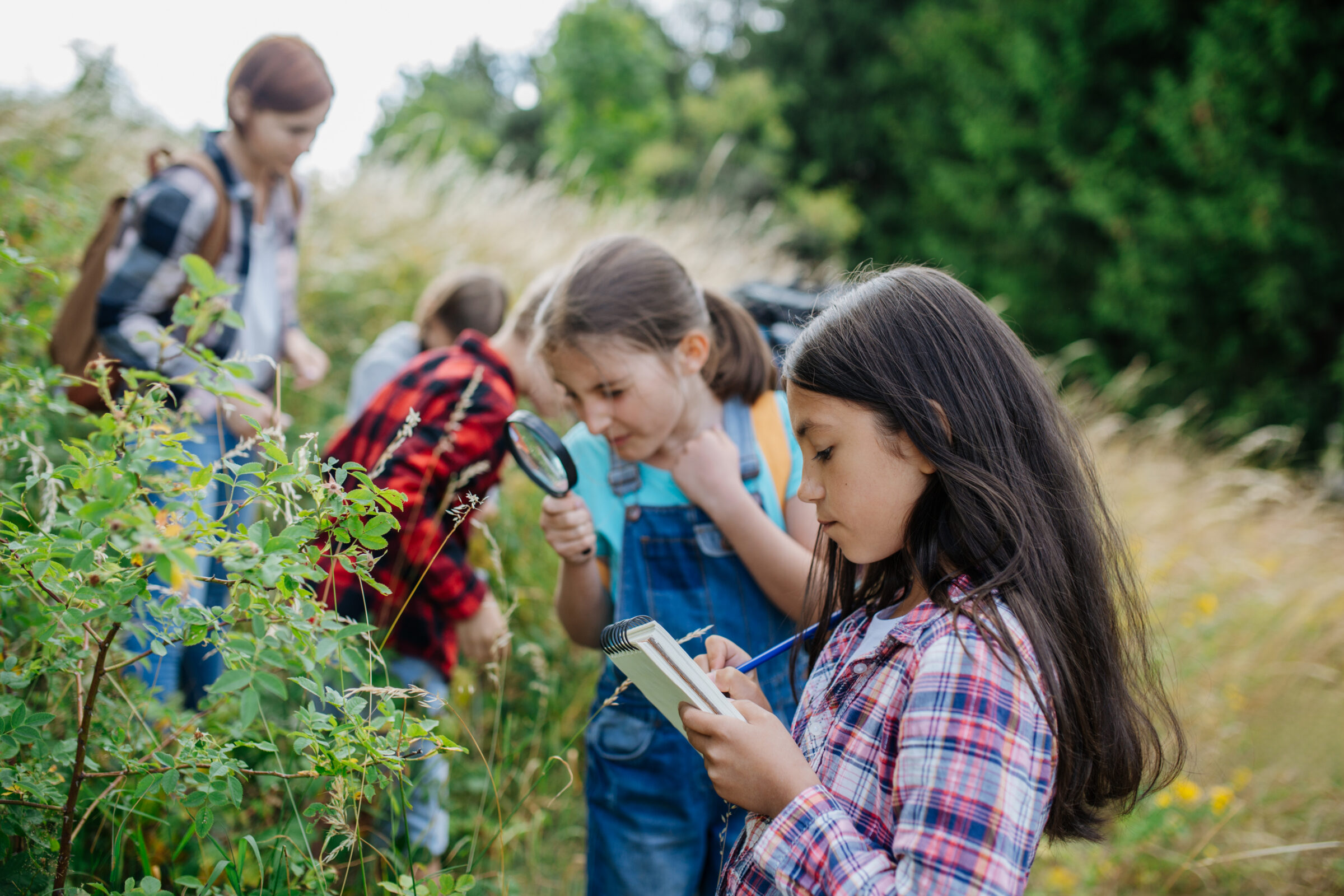
In Holland, Michigan, the Outdoor Discovery Center (ODC) Network is offering a way forward. It demonstrates what becomes possible when education is reimagined in what is taught, and also where and how learning happens. Rather than treating nature as an occasional field trip, ODC has integrated the outdoors into education — from early childhood through K-12 partnerships — creating an immersive model that deserves national attention.
What distinguishes ODC is not simply that students spend more time outside. It is that the school centers learning itself around curiosity, relationships, and real-world discovery.
What kinds of learning experiences actually cultivate lifelong learners? The Outdoor Discovery Center model offers a compelling answer that engages students, makes them curious and motivated, and helps them rediscover the joy of learning itself.
Keri D. Ingraham
Through sustained partnerships with local schools, ODC educators collaborate directly with classroom teachers to weave literacy, science, mathematics, history, problem-solving, and stewardship into hands-on learning experiences. Students study ecosystems firsthand, gather and analyze data, confront challenges, and develop critical thinking skills that cannot be replicated through worksheets alone.
Teachers receive ongoing coaching, professional development, and implementation support that helps school districts embed these practices across entire schools, not just individual classrooms, creating lasting change in how students learn.
This is the kind of education innovation our country urgently needs more of. With high student disengagement, declining mental health, and the need to prepare students for an increasingly complex world, educators, families, and employers desire new education models that reconnect students with meaningful learning.
A central but often overlooked question is: What kinds of learning experiences actually cultivate lifelong learners? The ODC model offers a compelling answer that engages students, makes them curious and motivated, and helps them rediscover the joy of learning itself.
Students thrive when learning is relevant. They learn best when instruction is active rather than passive and collaborative instead of isolated. Nature-based education delivers on all of these dimensions while also strengthening academic achievement, resilience, creativity, and problem-solving. There are critically important skills that employers increasingly demand in a rapidly changing economy.
Just as importantly, ODC leverages community partnerships. It seeks to serve as a bridge between educators, businesses, conservation professionals, families, nonprofits, and community partners, expanding where, how, and with whom learning happens.
Its partnership with Gentex to create a nature-based preschool for working families illustrates the powerful truth that employers can be meaningful partners in both education and workforce development. High-quality childcare supports today’s workforce while helping build tomorrow’s. This kind of collaboration should not be the exception but should become the norm.
Across the country, communities have untapped educational assets. Museums, farms, manufacturers, hospitals, universities, technology companies, parks, nonprofits, businesses, and skilled trade organizations hold expertise that can bring learning to life for students.
Imagine if communities did not just connect students for occasional enrichment but were instead intentional about making them a regular, core part of how education is delivered. Learning becomes far more powerful when students engage directly with professionals solving real problems in real settings.
ODC also reminds us that innovation in education does not necessarily require building new schools. An effective avenue is to form partnerships, empower educators with flexibility, and expand where learning takes place. Its work with school districts demonstrates how public education can be strengthened when local businesses, industries, and organizations are part of providing a transformational learning process.
As the nation prepares students for an increasingly competitive economy, America needs to rethink education and how it occurs. Experiential learning produces both strong academic outcomes and durable life skills, whether through outdoor education or a host of other collaborative learning environments such as advanced manufacturing, healthcare, agriculture, aviation, the trades, artificial intelligence, or entrepreneurship.
Families deserve educational options that reflect their children’s unique gifts and aspirations. Communities deserve the freedom to design learning systems that reflect local strengths. And students deserve schools that cultivate curiosity.
ODC is proving what is possible when education is reimagined with creativity, courage, and clarity. And students are responding.
America doesn’t need one ODC Network — it needs hundreds of communities willing to reimagine how and where learning happens. If we are serious about preparing the next generation for lives of contribution, innovation, and responsible citizenship, we must expand models like this now.