God

Atheist Antithesis

It is fashionable to note that there is nothing new in the “New Atheism” of Richard Dawkins, Daniel Dennett, et. al. However, they offer at least one genuinely new challenge to theistic belief: a challenge from developmental and cognitive psychology. Evolutionary biologists typically explain an organism’s existing traits-such as man’s propensity for religious belief-by reference to natural selection; existing traits Read More ›

Delusions of Grandeur

The Devil’s Delusion: Atheism and Its Scientific Pretensionsby David Berlinski Crown Forum, 237 pages, $23.95 It is at once lamentable and understandable that academics, wishing applause from other academics, proffer far-fetched theses. After all, no one receives applause (or tenure) with commonsensical hypotheses. When supposedly divined from capital-S “Science,” however, such theses are taken all too seriously. David Berlinski’s The Read More ›

florenz-galileo-galilei-stockpack-adobe-stock.jpg
Florenz, Galileo Galilei
Image Credit: ArTo - Adobe Stock

Shedding the Galileo Complex

God’s Undertaker: Has Science Buried God?By John LennoxLion Hudson, 192 pages, $14.99 A friend recently put it to me that the Church has a Galileo Complex. Terrified by the historical narrative of the Church’s resistance to and persecution of science, Christians are averse to challenging “scientific” claims. “Complex” is an apt description, too: a group of unconscious impressions, not a Read More ›

Deconstructing Dawkins

As Oxford professor and arch-evangelist of atheism Richard Dawkins continues his crusade against religion, we finally have the first book-length critique of The God Delusion: Alister McGrath and Joanna Collicutt McGrath’s The Dawkins Delusion?: Atheist Fundamentalism and the Denial of the Divine (InterVarsity Press). One could hardly think of a more contrasting figure to Dawkins or a better apologist for Read More ›

Review: The Language of God: A Scientist Presents Evidence for Belief

This review appears in the October issue of The American Spectator. To subscribe, click here. The Language of God:A Scientist Presents Evidence for Beliefby Francis S. Collins(Free Press, 304 pages, $26) RECENTLY ASTROPHYSICIST and stalwart Darwin-defender George Coyne lectured before the largest scientific organization in the world, the American Association for the Advancement of Science. As he railed against biological arguments for Read More ›

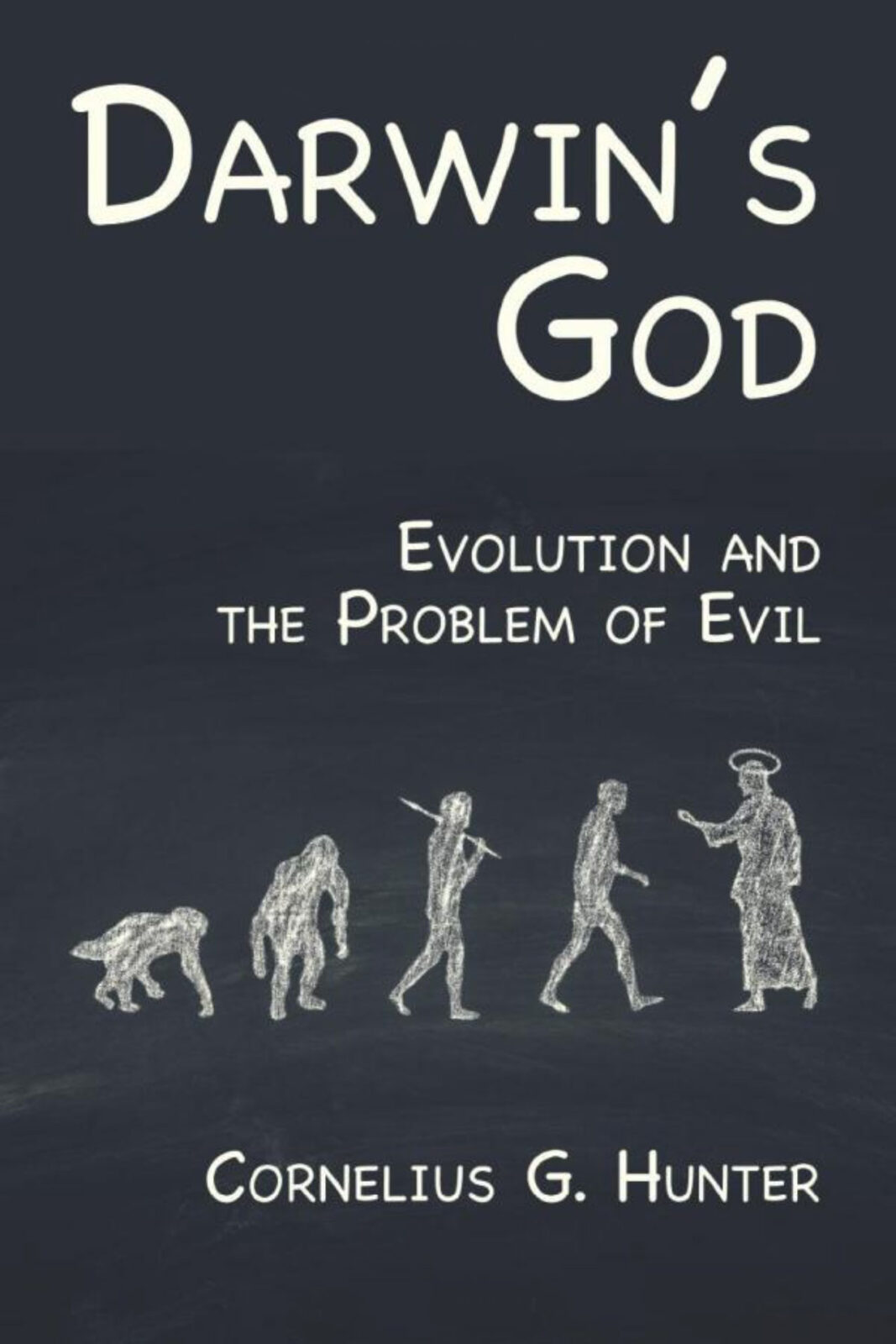
darwins-god-hunter
Darwin's God by Cornelius G. Hunter

Darwin’s God

Biophysicist and Discovery Fellow Cornelius Hunter scrutinizes the evidence used to support Darwinian theory. Not only does Hunter find that the scientific evidence for Neo-Darwinism is weak, but he exposes that much of evolutionary theory has historically been built upon dysteleological arguments against design. In other words, evolution grew in popularity because it argued against a particular theological position, not Read More ›

hand-of-prayer-person-worship-with-light-stockpack-adobe-stock
Hand of prayer person worship with light
Image Credit: BillionPhotos.com - Adobe Stock

The Faith of a Futurist

Every year I host a conference on the future of the Internet in a world of bandwidth abundance. On the last day, I hold a debate or panel on the religious significance of the technological disputes. Every year, some attendees object to this insertion of theology into the midst of a meeting otherwise devoted to the higher vocations of microelectronics Read More ›

pink-flower-growth-stages-from-seed-to-bloom-representing-bu-1174081471-stockpack-adobestock
Pink Flower Growth Stages: From Seed to Bloom, Representing Business Growth, Career Success, and Life's Journey. Concept Image for Marketing, Investment, and Sustainable Growth.
Image Credit: avissarahmanita - Adobe Stock

Designed for Living

Does God exist? You can answer that question in at least two ways, including, notably, “yes.” But how do you argue for that particular answer?

A new cottage industry among the religiously minded is the re-articulation of the so-called “cosmological argument” for the existence of God. Its proofs work backward. They start with visible creation and reason that it can only be the work of an uncreated First Cause. Such proofs were once compelling to educated people. Now the average college graduate can do without them. He doesn’t know exactly why this is so; he simply believes that Darwin and Stephen Hawking have somehow managed to explain creation without reference to a Creator.

Darwin and Hawking, of course, have done no such thing. Science can never answer the question: Why is there something rather than nothing? The universe is a massive fact that does not account for its existence and — some would say, following Goedel’s incompleteness theorems — cannot do so. This does not stop certain astrophysicists from trying to generate whole universes from mathematical equations. But a mathematical model does not tell us why there is a universe to describe in the first place.

If we cannot so easily dismiss the brute fact of the universe, neither can we ignore its appearance of having been designed. As one staunchly atheistic 20th-century astronomer put it: “A common sense interpretation of the data suggests that a superintellect has monkeyed with physics, as well as with chemistry and biology.” How do you get around such a “common sense” interpretation? Darwin supplied the answer: Any “design” in nature is only apparent, the work of blind mechanisms. All you need to produce the bombardier beetle, for example, is random variations directed by natural selection — and a lot of time.

Read More ›