Port of Seattle

Snohomish Wants Commuter Train On Abandoned Corridor

This article, published by the Everett Herald, mentions Discovery Institute Fellow Bruce Agnew: No plan has been developed to renovate the tracks for commuter trains and to build a recreational trail along the tracks, said Bruce Agnew, director of Cascadia Center for Regional Development. The nonprofit group in Seattle advocates preserving the tracks. The rest of the article can be Read More ›
Port On Track To Purchase BNSF corridor

This article, published by the Woodinville Weekly, mentions the Cascadia Center of Discovery Institute: The Cascadia Center for Regional Development, a transportation policy think tank, made a big push at the end of last year to promote utilizing the existing corridor for both transit and trail. The rest of the article can be found here.

Interview Of Bruce Agnew, on Eastside Rail

This article contains an interview with Discovery Institute Fellow Bruce Agnew about Eastside Rail on the Dave Ross Show. Here is the MP3 audio file of the interview during the second hour of the Dave Ross Show on 12/14/07.

Innovative Transit Idea Shouldn’t Be Dismissed

This article, published by The Everett Herald, mentions the Cascadia Center of Discovery Institute: That proposal has been advanced by the Cascadia Center, the transportation arm of the Seattle-based Discovery Institute, a private think tank. The rest of the article can be found here.

Cascadia’s Rails And Trail Campaign Catching Attention

This article, published by the Woodinville Weekly, mentions the Cascadia Center of Discovery Institute: But in recent weeks, the transportation policy think tank known as “Cascadia Center,” (http://www.cascadiaproject.org) has stepped up its “save the rails” campaign. The rest of the article can be found here.

Rails-To-Trail Deal Hits Bump

This article, published by Seattle PI, mentions Discovery Institute Fellow Bruce Agnew: It is possible to have passenger trains and pedestrians both use the corridor at a much lower cost, said Bruce Agnew, the director of the Cascadia Center at Discovery Institute … The rest of the article can be found here.

Cascadia: Eastside Corridor Can Support Interurban Rail

Original article (includes transcript plus RealAudio and MP3 links to story). The Cascadia Center at Discovery Institute says an independent study shows the Eastside Rail Corridor can support interurban rail. The finding from the think tank is contrary to a plan in the works between the port, the county, and Burlington Northern Santa Fe to remove the tracks and build Read More ›

Eastside BNSF Rail Line Inspection Report

(Contact: Bruce Agnew, Director, Cascadia Center For Regional Development, 206-228-4011). EXECUTIVE SUMMARY: Retired BNSF Operations Director Read Fay did an on-site visual inspection of the 42-mile long BNSF Eastside rail line between October 1st and November 16th, 2007 for the Discovery Institute’s Cascadia Center to determine the capability of the line to support a safe commuter rail operation at a Read More ›

Study Shows Eastside Rail Line Can Support Interurban Rail

SEATTLE, Wash. (November 21, 2007)—The Cascadia Center at Discovery Institute, a regional think tank that focuses on transportation and sustainable development for the Puget Sound region, announced today that an independent study shows that the Eastside Rail Corridor can support interurban rail. Cascadia will unveil the full results of the study on Monday, November 26, 2007, at a community forum Read More ›

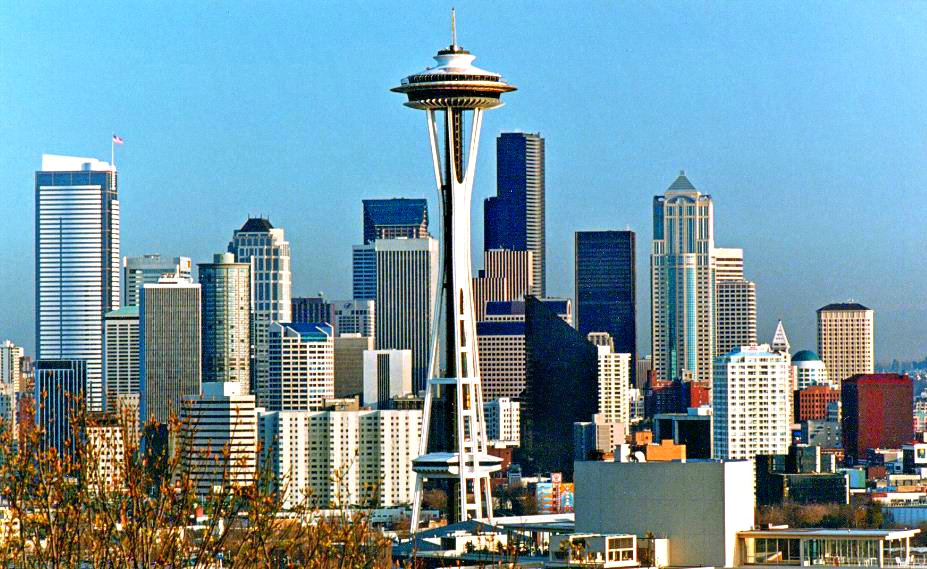
Seattle-from-Kerry-Park-1990s

Six Solutions for Seattle – Global City or Just Another Town?

METROPOLITAN Seattle - from Everett to Tacoma and from Puget Sound to the Cascade foothills - in the past decade has become a true international "Citistate," to use the term coined by syndicated columnist Neal R. Peirce. A Discovery Institute project, "International Seattle: Creating a Globally Competitive Community," is aimed at helping the region define a new strategy for increasing its international competitiveness. With the help of a 24-member advisory board and a host of volunteers, we have conducted interviews throughout the region and studied a dozen other cities' international programs. It was a breakthrough in 1990 when community-wide response to international concerns led to the creation of the Trade Development Alliance of Greater Seattle. The "TDA" pulled together resources from the city of Seattle, King County, the Port of Seattle, the Greater Seattle Chamber of Commerce and organized labor, with a stated goal of making this region "one of North America's premier international gateways and commercial centers." Read More ›