Intelligent Design

The Center for Science and Culture

pink-flower-growth-stages-from-seed-to-bloom-representing-bu-1174081471-stockpack-adobestock
Pink Flower Growth Stages: From Seed to Bloom, Representing Business Growth, Career Success, and Life's Journey. Concept Image for Marketing, Investment, and Sustainable Growth.
Image Credit: avissarahmanita - Adobe Stock

Designed for Living

Does God exist? You can answer that question in at least two ways, including, notably, “yes.” But how do you argue for that particular answer?

A new cottage industry among the religiously minded is the re-articulation of the so-called “cosmological argument” for the existence of God. Its proofs work backward. They start with visible creation and reason that it can only be the work of an uncreated First Cause. Such proofs were once compelling to educated people. Now the average college graduate can do without them. He doesn’t know exactly why this is so; he simply believes that Darwin and Stephen Hawking have somehow managed to explain creation without reference to a Creator.

Darwin and Hawking, of course, have done no such thing. Science can never answer the question: Why is there something rather than nothing? The universe is a massive fact that does not account for its existence and — some would say, following Goedel’s incompleteness theorems — cannot do so. This does not stop certain astrophysicists from trying to generate whole universes from mathematical equations. But a mathematical model does not tell us why there is a universe to describe in the first place.

If we cannot so easily dismiss the brute fact of the universe, neither can we ignore its appearance of having been designed. As one staunchly atheistic 20th-century astronomer put it: “A common sense interpretation of the data suggests that a superintellect has monkeyed with physics, as well as with chemistry and biology.” How do you get around such a “common sense” interpretation? Darwin supplied the answer: Any “design” in nature is only apparent, the work of blind mechanisms. All you need to produce the bombardier beetle, for example, is random variations directed by natural selection — and a lot of time.

Read More ›

Are We Spiritual Machines?

For two hundred years materialist philosophers have argued that man is some sort of machine. The claim began with French materialists of the Enlightenment such as Pierre Cabanis, Julien La Mettrie, and Baron d’Holbach (La Mettrie even wrote a book titled Man the Machine). Likewise contemporary materialists like Marvin Minsky, Daniel Dennett, and Patricia Churchland claim that the motions and Read More ›

Darwinism Defeated?

This volume contains a debate between design advocate Phillip E. Johnson and evolutionary biologist Denis Lamoureux, with commentary from other scholars in this debate. Though differing in opinion over evolution, all contributors are Christians who conduct the discussion in a civil manner.  Dr. Lamoureux asks challenging questions of Johnson, asserting that Johnson’s position is based upon “God-of-the-gaps” type arguments. Lamoureax Read More ›

Intelligent-Design-in-Public-School-Science-Curricula-DeWolf-Meyer-Forrest

Intelligent Design in Public School Science Curricula

A Legal Guidebook presenting the U.S. law and case histories that support the teaching of intelligent design in public school science curriculum. Teachers, administrators, and school board attorneys will benefit from the support given to teachers to use important supplemental information in the teaching of origins as is presented in Of Pandas and People. Including discussions of design in the Read More ›

stay out train
stay out painted on a train wagon
Image Credit: Claude - Adobe Stock

Darwinism and Design

Last week the Kansas Board of Education voted to remove from state standards references to evolution as the underlying principle of biology. While the vote allows schools the freedom to teach about evolution, the battle is being reported as a simple conflict between scientific ‘evolutionists’ on one side and fundamentalist ‘creationists’ on the other, following the standard trope of the Read More ›

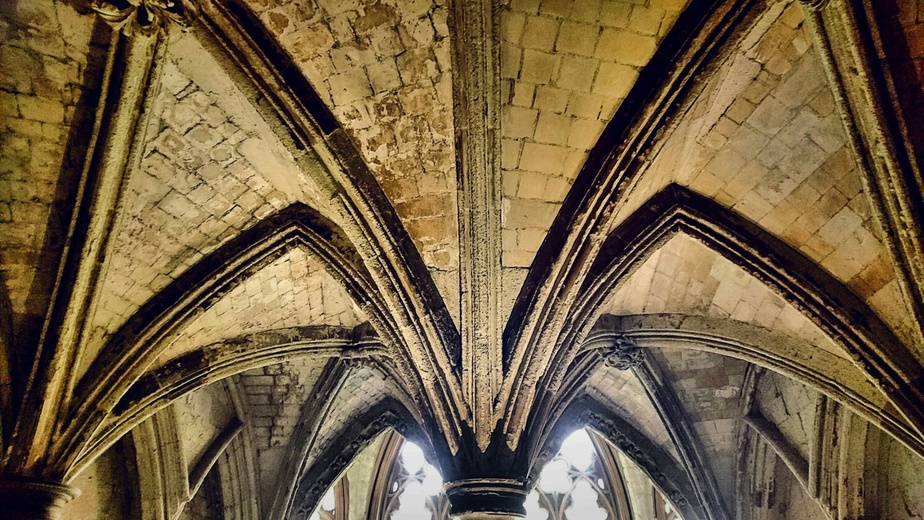
low-angle-view-of-ribbed-vaulting-at-westminster-abbey-stockpack-adobe-stock.jpg
Low Angle View Of Ribbed Vaulting At Westminster Abbey
Licensed from Adobe Stock

The Church of Darwin

A Chinese paleontologist lectures around the world saying that recent fossil finds in his country are inconsistent with the Darwinian theory of evolution. His reason: The major animal groups appear abruptly in the rocks over a relatively short time, rather than evolving gradually from a common ancestor as Darwin’s theory predicts. When this conclusion upsets American scientists, he wryly comments: Read More ›

Photo by NeONBRAND

Teach Evolution

BETHLEHEM, Pa. — The debate leading the Kansas Board of Education to abolish the requirement for teaching evolution has about the same connection to reality as the play ‘Inherit the Wind’ had to the actual Scopes trial. In both cases complex historical, scientific and philosophical issues gave way to the simplifying demands of the morality play. If the schoolchildren of Read More ›

business-and-entrepreneurship-symposium-speaker-giving-a-talk-at-business-meeting-audience-in-conference-hall-rear-view-of-unrecognized-participant-in-audience-stockpack-adobe-stock.jpg
Business and entrepreneurship symposium. Speaker giving a talk at business meeting. Audience in conference hall. Rear view of unrecognized participant in audience.
Licensed from Adobe Stock

Design & the Discriminating Public

Evolution has enormous purchase on the public imagination, and it’s easy to understand why. Just peek into the average living room where toddlers everywhere are sitting wide-eyed before videos like The Land Before Time series. This series offers nothing less than an excursion into evolution. Colorful one-celled organisms arise in a blue-green primeval ocean, where they “change again and again,” Read More ›

close-up-beautiful-one-blue-bird-feather-on-a-bokeh-pattern-background-for-design-texture-stockpack-adobe-stock.jpg
Close up Beautiful one blue Bird feather on a bokeh.  Pattern background for design texture.
Licensed from Adobe Stock

Intelligent Design Theory

In this scientific age, it is impossible to quarantine the claims of science. They invariably leak into other cultural domains. So we should attend to what scientists tell us. Sometimes it is quite important. For instance, in The Meaning of Evolution, George Gaylord Simpson repeats what is surely the “official” dogma of the contemporary scientific guild: “Man is the result Read More ›

The Last Magic

If mathematics is about finding solutions to well-defined problems, then philosophy is about finding problems in what previously we thought were well-settled solutions. Mark Steiner’s The Applicability of Mathematics As a Philosophical Problem mirrors both sides of this statement, admitting that mathematics is the key to solving problems in the physical sciences, but also asserting that this very applicability of Read More ›

God … Sort Of

Paul Davies should need little introduction to readers of First Things. A theoretical physicist and prolific author, he won the 1995 Templeton Prize for Progress in Religion. As the title of the address he gave in receiving the award indicates (“Physics and the Mind of God” [First Things, August/September 1995]) he does not hesitate to think about the Deeper Meaning Read More ›

Haeckel’s Embryos

In The Origin of Species Charles Darwin wrote that “the embryos of mammals, birds, fishes, and reptiles [are] closely similar, but become, when fully developed, widely dissimilar.” He inferred that all vertebrates “are the modified descendants of some ancient progenitor,” and that “the embryonic or larval stages show us, more or less completely, the condition of the progenitor of the whole Read More ›