fossils

I, Charles Darwin- Being the Journal of His Visitation to Earth in the Year 2009

I, Charles Darwin

What would happen if Charles Darwin returned and visited the Earth today? That’s the fascinating question posed by historian Nickell John Romjue’s short novel I, Charles Darwin, which follows the famous British naturalist as he explores the science of the twenty-first century and reflects on what it means for his theory of evolution. Finding himself returned to earth in 2009 Read More ›

Darwin’s Dilemma

Darwin’s Dilemma

Darwin’s Dilemma examines what many consider to be the most powerful refutation of Darwinian evolution — the Cambrian fossil record. Charles Darwin realized that the fossil evidence did not support his theory of gradual, step-by-step evolutionary development. He hoped that future generations of scientists would make the discoveries necessary to validate his ideas. Today, after more than 150 years of Read More ›

Sample collection and study of the skeleton of a monkey
Sample collection and study of the skeleton of a monkey, and animals.

What ‘Ida’ Give for a Missing Link

As a follower of the evolution debate, I love it when new “missing links” are found. Not only does the media plunge headfirst into a crusade for Darwin, but suspiciously, it is only after unveiling the breakthrough that evolutionary biologists admit how precious little evidence they previously held for the evolutionary transition in question. Take the recent media coverage of Read More ›

Dinosaur Fossil (Tyrannosaurus Rex).jpg
Dinosaur Fossil (Tyrannosaurus Rex) Found by Archaeologists
Image Credit: trafa - Adobe Stock

Intelligent Design Has Scientific Merit in Paleontology

[Editor’s note: This article was posted as part of a series of articles both for and against ID at OpposingViews.com.] “What one actually found was nothing but discontinuities. All species are separated from each other by bridgeless gaps; intermediates between species are not observed. … The problem was even more serious at the level of the higher categories.”1—Leading 20th Century Read More ›

Politically-Incorrect-Guide-to-Darwinism-and-Intelligent-Design-1-947x1200

The Politically Incorrect Guide to Darwinism and Intelligent Design

In the 1925 Scopes trial, the American Civil Liberties Union sued to allow the teaching of Darwin’s theory of evolution in public schools. Seventy-five years later, in Kitzmiller v. Dover, the ACLU sued to prevent the teaching of an alternative to Darwin’s theory known as “Intelligent Design” — and won. Why did the ACLU turn from defending the free-speech rights Read More ›

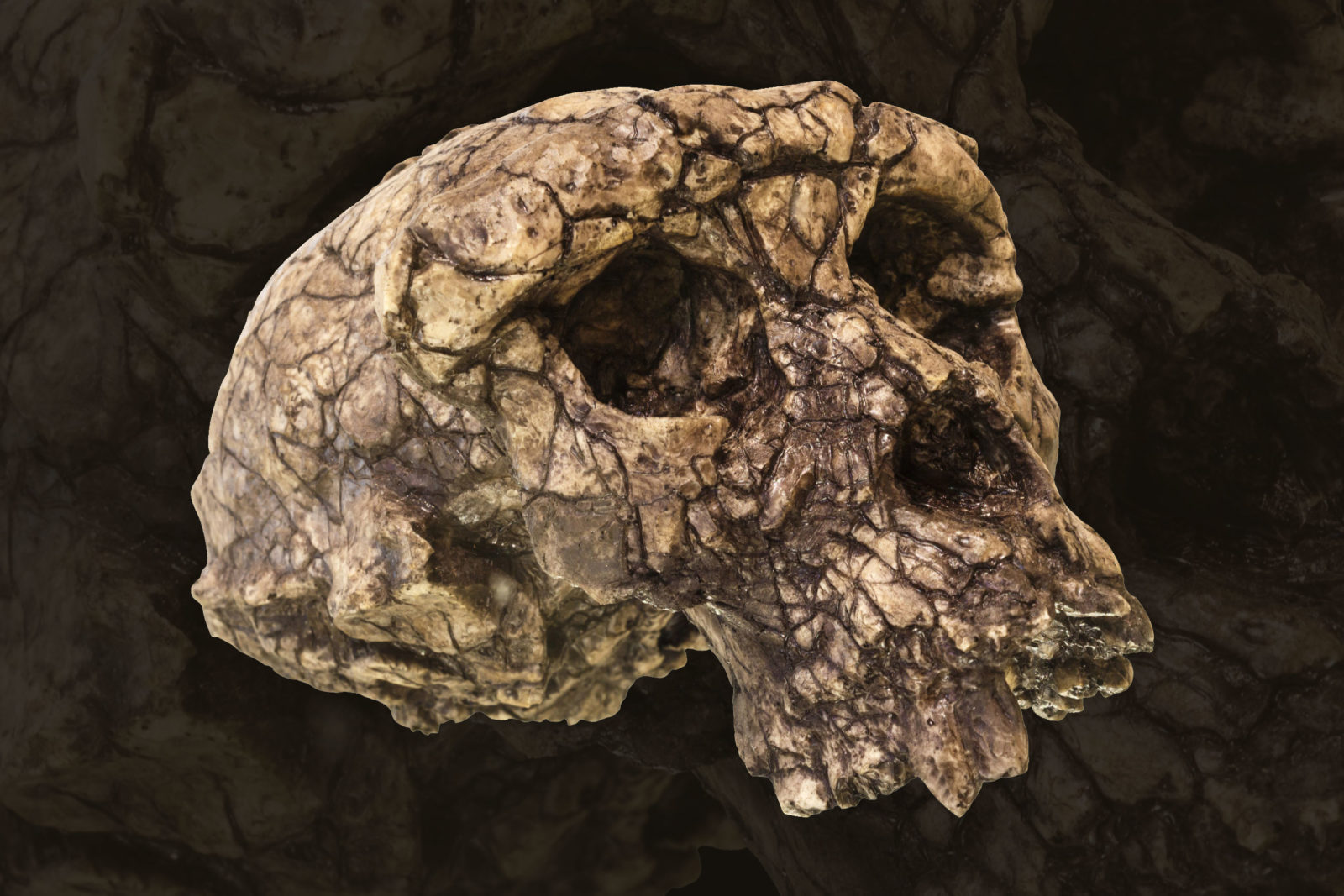
sahelanthropus-tchadensis-skull-dark-background
Sahelanthropus tchadensis Skull ( Toumai ) . Discovered in 2001 in Djurab desert in Northern Chad , Central africa . Dated to 7-6 million years ago

Latest fossil find: no proof of ape-like ancestry, Wells says

A chimpanzee-like skull in size and shape, a large brow akin to a gorilla and some human-like teeth — all features of the latest archaeological find, named “Toumai” — do not enhance the cause of Darwinian evolution. Jonathan Wells, one of the leading thinkers in the intelligent design movement, remains as doubtful of evolution as ever. “Proponents of Darwinian evolution Read More ›
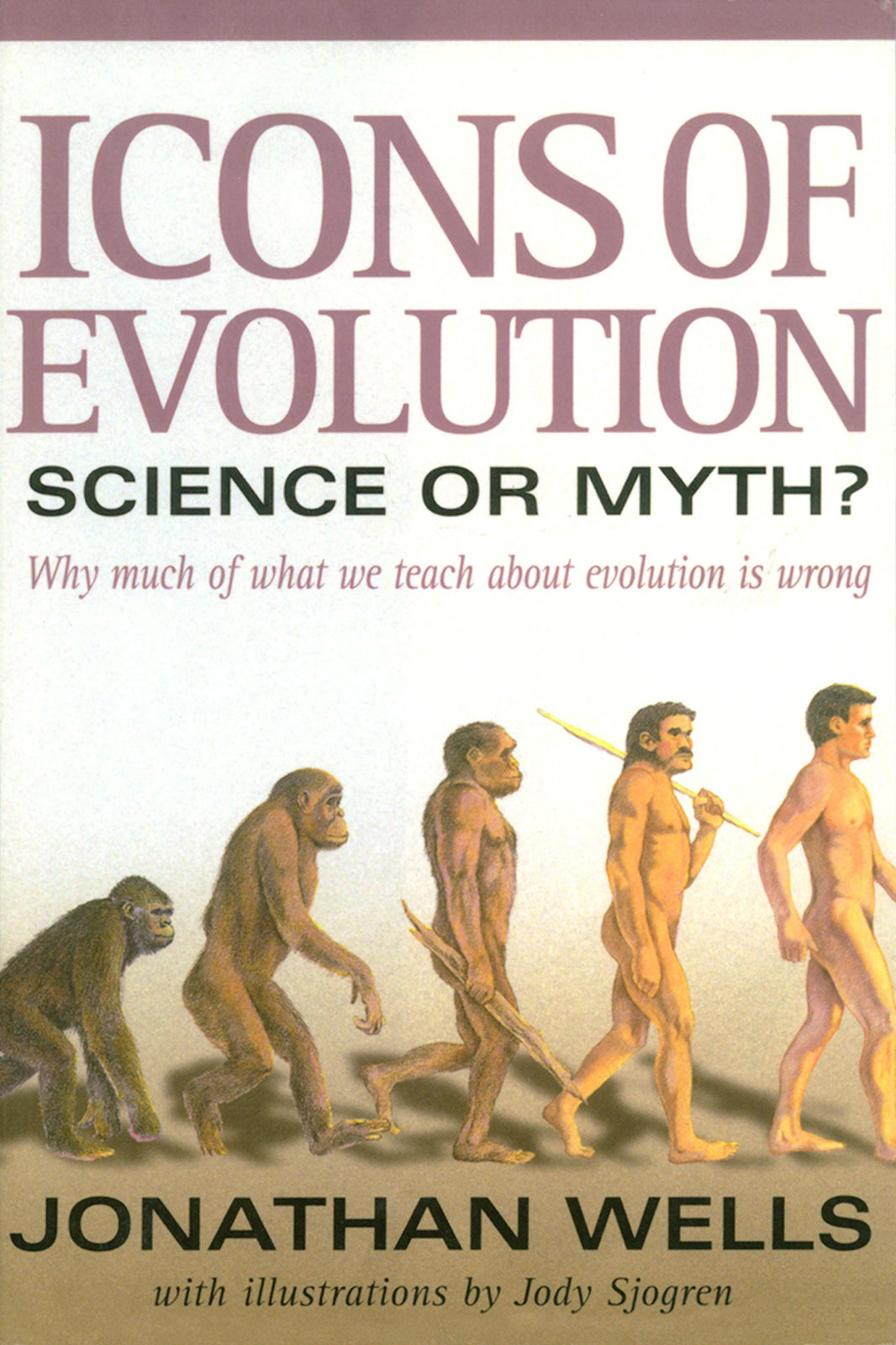
Icons-of-Evolution
Illustration © Jody Sjogren, 2000

Icons of Evolution

Authored by developmental biologist and Senior Discovery Fellow Jonathan Wells, this book takes aim at 10 common “icons” used to bolster Darwin’s theory in widely used biology textbooks. The “icons” commonly cited to support evolution in textbooks turn out to be scientific urban legends, long-refuted fakes, or misrepresentations of the scientific data. One of the most famous “icons” discussed is Read More ›

natural-limits-lester-bohlin

The Natural Limits to Biological Change

This study is a careful and refreshing evaluation of the long-held views of Darwinism and Neo-Darwinism and the views of those who consider “punctuated equilibrium” to be the best explanation of the existing world of living beings. Darwinists and Neo-Darwinists hold that organisms are able to respond to only minor fluctuations in their environment. This view has come under increasing Read More ›