Michele Steeb

Senior Fellow, Fix Homelessness Initiative

Michele Steeb is the founder of the Free Up Foundation and author of Answers Behind the RED DOOR: Battling the Homeless Epidemic, based on her 13 years as CEO of Northern California’s largest and most comprehensive program for homeless women and children.

A nationally recognized thought leader on homelessness, Michele brings decades of leadership and policy experience rooted in real-world impact. She has consistently advanced reforms that dismantle failing systems and champion models rooted in human dignity, personal accountability, and holistic recovery. As Michele often says, “We must build a homelessness system that sees the whole person—not just their lack of housing—but their potential to recover, grow, and prosper.”

Michele consults with communities and public policy organizations nationwide, including Discovery Institute, where she currently serves as a Senior Fellow of their Fix Homelessness Initiative. As a consultant, she guides leaders in developing place-based strategies that move beyond "housing first" to focus on healing—addressing addiction, mental illness, trauma, and the personal restoration necessary for lasting independence.

Her insights have been featured across national platforms, including The Oprah Winfrey Show (2008) and Dr. Phil (2024), as well as in USA Today, The Washington Post, New York Post, FoxNews.com, The Daily Caller, Newsweek, The Federalist, and more.

Michele believes true compassion means empowering individuals to reclaim their lives with structure, safety, and support— not abandoning them to deteriorate on the streets in the name of personal autonomy. Her work centers on restoring purpose, responsibility, and human connection for both those experiencing homelessness and the communities burdened by it.

Appointed by California Governor Jerry Brown to the State’s Prison Industry Authority (2012–2020), Michele helped replicate her transitional model for women exiting prison.

She has received numerous national awards for her work to build systems that deliver human restoration and public renewal.
Archives

Reintegrating Faith Into the Nation’s Approach to Homelessness

For more than a century, America’s response to homelessness was rooted in faith. Churches, rescue missions, Catholic Charities, and the Salvation Army fed the hungry, sheltered the vulnerable, and most importantly, walked alongside them toward restoration. They innately understood a fundamental truth: Homelessness is a human transformation challenge requiring recovery, accountability, and the restoration of purpose. Over the past decade, however, policymakers were increasingly steered toward a different conclusion. A one-size-fits-all approach was supposed to end homelessness and simplify it — housing as the solution, housing placement as the sole metric, and a uniform approach applied everywhere. For policymakers drawn to ease, the appeal was obvious. But in embracing

Newsom Tries to Shift Blame on Homelessness to Local Government

Gavin Newsom stood before the cameras in early March and once again blamed local governments for the state’s spiraling homelessness crisis. “No more excuses,” he thundered, threatening to strip funding from counties he claims are underperforming while promising to redirect “every damn penny” to those “getting things done.” Newsom is once again attempting to shift blame for California’s homelessness crisis — the very crisis he has repeatedly pledged to solve, including his 2021 vow to end family homelessness within five years. Since 2017, homelessness in California has surged by more than 40 percent — from roughly 134,000 people to nearly 187,000 in 2024 — despite an estimated $30 billion in spending he authorized. His

Addiction Is a Disease — Policy May Finally Catch Up

More than 48 million Americans are battling substance use disorder. Many are deteriorating in plain sight — on sidewalks, in encampments, and in emergency rooms. Others decline behind closed doors. Overdoses are shattering families, especially within the homeless population where the death rate among people living on the streets has surged by 77 percent. Yet in a media landscape quick to amplify controversy but slow to recognize consequential reform, President Donald Trump’s executive order to overhaul America’s addiction response passed with remarkably little national attention. It shouldn’t have. At its core, the order affirms a truth long understood by those who have worked on the front lines: no man or woman living with addiction ever dreamed of

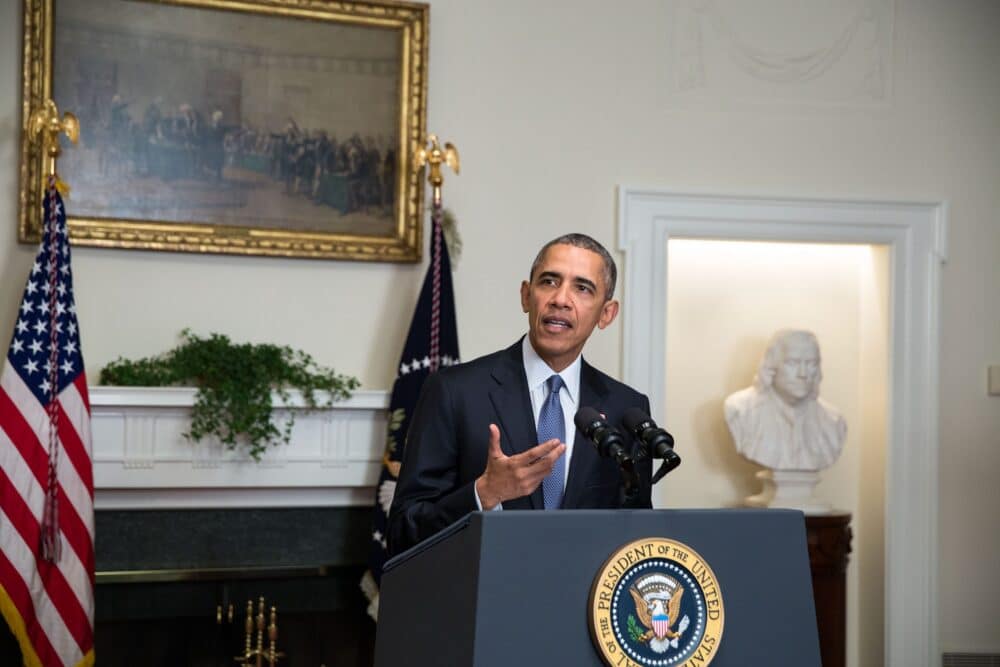
Obama Admits Housing First was a Losing Strategy

Last weekend, former President Barack Obama acknowledged a blunt political reality: “The average person doesn’t want to have to navigate around a tent city in the middle of downtown … and we’re not going to be able to generate support if we simply say, ‘It’s not their fault, they should be able to do whatever they want,’ because that’s a losing political strategy.” What makes the remark notable is not merely its candor. It is the history behind it. It was the Obama administration that institutionalized the federal government’s one-size-fits-all embrace of Housing First in 2013. They promised the approach would end homelessness within a decade by prioritizing immediate housing placement. The theory was simple: Housing would

More Spending, More Suffering: The Failure of America’s Homelessness Policy

In a recent ruling that defies both logic and compassion, a federal judge has blocked the Trump administration’s effort to reform the Department of Housing and Urban Development’s (HUD) Continuum of Care program — the federal government’s primary funding mechanism for homelessness assistance. The lawsuit — filed by a coalition of 20 mostly Democratic-led states, local governments, and nonprofit organizations and spearheaded by groups such as Democracy Forward — warns of “funding gaps,” winter instability, and the potential displacement of people currently housed. These alarms are sounded even though HUD includes a nearly 12% increase over last year’s funding allocation. At the core of the complaint is a revealing claim: that reform would

Tragic Tales Demand Reform

Across America’s streets, the homeless epidemic is claiming lives, fracturing families, and eroding public safety. Often deeply intertwined with mental illness and addiction, it has become a humanitarian crisis that traps vulnerable individuals in cycles of dependence and despair while destabilizing the communities around them. This crisis has been worsened by policies that elevate the notion of “freedom” over timely, life-saving intervention. Recent events make the consequences of that choice unmistakably clear. Continuing on the current path is neither humane nor responsible. Consider what unfolded in New York City over the holidays. A woman with a documented history of serious mental illness and homelessness was released from psychiatric care, only to purchase

“Humanitarian Emergency”: Seattle’s New Mayor Must Bring an End to the City’s Homelessness Crisis

Seattle’s incoming mayor, Katie Wilson, will inherit a homelessness crisis that will define her ability to lead. Seattle’s homeless population needs more than another round of aspirational promises. They need and deserve an operational reset grounded in compassion, accountability, and the courage to confront realities the city has failed to address for years. She must replace press releases and ceremonial groundbreaking for housing that may never materialize with programs that support the homeless in reclaiming their lives from the grip of untreated mental illness, addiction, and dangerous encampments that have taken root throughout the city. The scale of Seattle’s crisis is staggering. HUD’s 2024 Point-in-Time count identified 16,868 people struggling

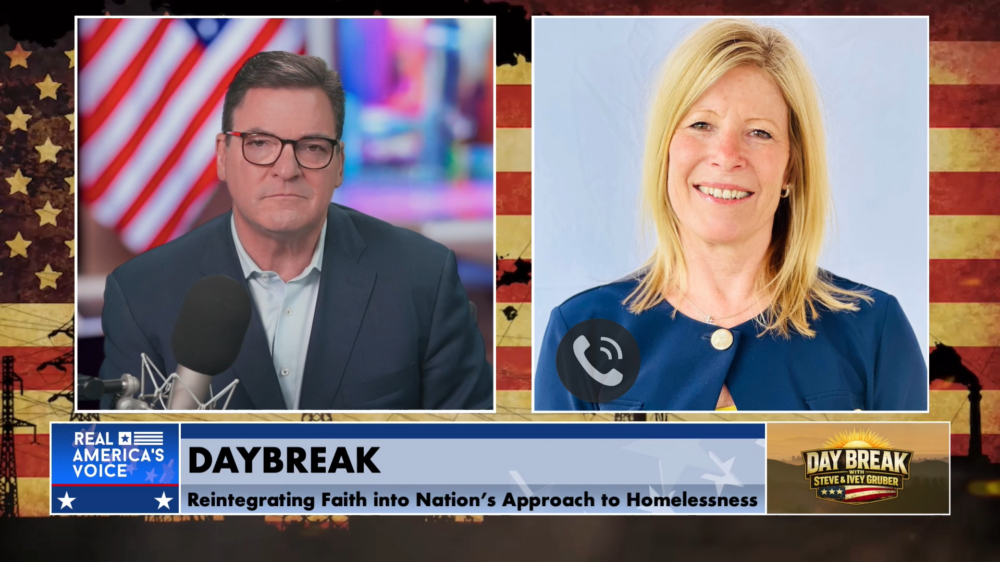
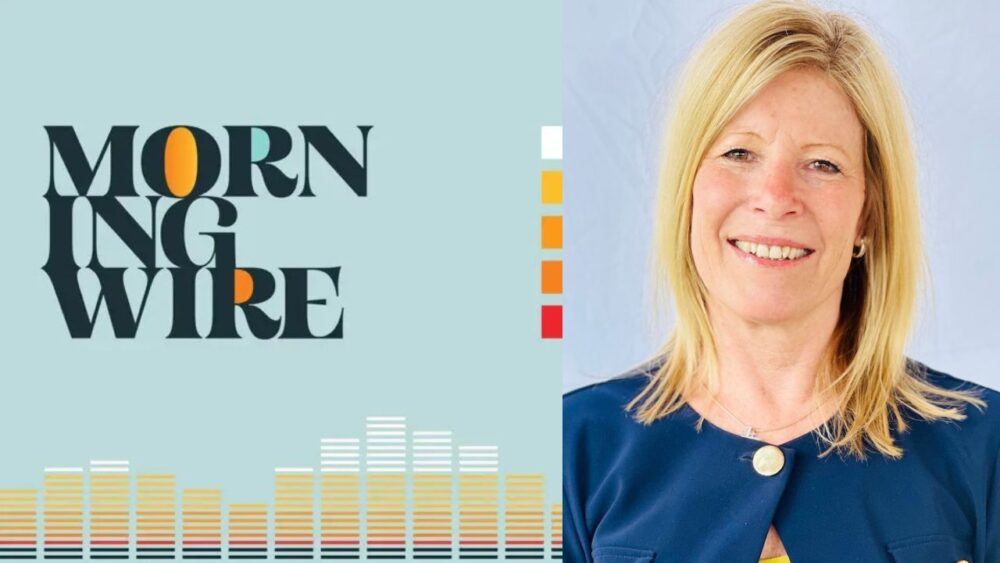
Michele Steeb Talks Housing First Failure and What Fixes Homelessness on Morning Wire

Michele Steeb joined a weekend edition of Morning Wire, presented by Daily Wire Editor-in-Chief John Bickley and co-host Georgia Howe, to discuss the recent federal reforms that offer hope for our homelessness crisis. Steeb covers how faith-based programs used to spearhead the fight against homelessness, how the Obama administration changed the federal approach for the worse, and what the Trump administration’s recent reforms mean for the homeless and communities nationwide. Years after President Barack Obama promised to end homelessness, the problem has only surged. In this episode, we sit down with expert @SteebMichele, who wrote the book on how to approach the homeless crisis, and discuss the moves President Trump is making to force progressive…

A New Study Just Exposed the Corruption Behind America’s Homelessness Crisis

For years, Americans have been told that “compassion” for the homeless meant writing ever-larger checks — more money, more programs and far less accountability. Now, at last, we have some answers for why homelessness has exploded even amid a tripling of public spending. A groundbreaking investigation, “Infiltrated” — backed by more than 50 pages of documentation from the Capital Research Center in cooperation with Discovery Institute — pulls back the curtain on a vast system of corruption. It reveals how billions in taxpayer funds intended to lift people out of homelessness have instead bankrolled radical activism and anti-American political agendas, betraying both the taxpayers who fund it and the homeless they were meant to help. Despite

Housing Without Healing Won’t Cure Homelessness

Homelessness in California — and across America — has reached a breaking point. The crisis has climbed to the highest level ever recorded, even as billions more are poured into housing subsidies and bureaucratic programs that promise compassion but deliver only despair. No one bears the consequences more cruelly than the homeless themselves. Their death rate has soared by 77% in the country’s largest urban areas, a devastating indictment of a system that prioritizes housing units over human healing. Communities, too, shoulder the burden — streets overrun, neighborhoods destabilized and taxpayers funding a model that fails everyone it claims to help. President Donald Trump’s recent executive order marks the first real course correction in over a decade. By

Newsom Just Made a Catastrophic Mistake on California’s Homelessness Disaster

In a catastrophic miscalculation that exposes his continued attachment to failure, California Gov. Gavin Newsom vetoed Assembly Bill 255 on Oct. 1. It was a bipartisan measure designed to expand access to recovery housing for homeless individuals struggling with substance use disorders. His veto comes at a time when California’s homeless can least afford more failure. AB 255, authored by Assembly member Matt Haney, would have allowed up to 10% of state homelessness funds to support abstinence-based recovery housing. These programs integrate shelter with sobriety requirements, accountability and supportive services that help people reclaim stability. Newsom dismissed the bill as “unnecessary,” insisting that current guidelines already permit sober housing and

Michele Steeb Talks Rethinking Homelessness with Tudor Dixon

Michele Steeb appeared on The Tudor Dixon Podcast to discuss why Housing First isn’t enough. Steeb reviews the history of Housing First, why it has failed, the dismal state of homelessness in California, and why treatment- and recovery-focused policies are the correct path forward. Listen to Podcast Episode Here

Michele Steeb Talks Homelessness with Shaun Thompson

Michele Steeb appeared on The Shaun Thompson Show to discuss homelessness. Steeb explains the pivotal shift in homelessness policy that occurred in 2013, the new direction President Trump is steering homelessness policy today, the financial corruption behind Housing First, and more. Listen to the Podcast Episode Here

Michele Steeb Talks with NTD News About Killing of Ukrainian Refugee

Michele Steeb appeared on NTD News and spoke with host Don Ma about the recent tragic killing of Ukrainian refugee Iryna Zarutska. Steeb addresses the relationship between homelessness, mental illness, and crime, and explains why housing subsidies do not fix these issues. Steeb speaks from her experience running a Northern California program for homeless women and children. Watch Michele Steeb on NTD News

The Consequential Link in Ending Street Chaos: Compassion Plus Accountability

America’s streets have reached a breaking point. Encampments sprawl across sidewalks, untreated mental illness and addiction fuel disorder, and public spaces once vibrant with life have become zones of despair. President Donald Trump’s recent executive orders—Ending Disorder on America’s Streets and Addressing Crime and Beautification in D.C.—finally confront this decade-long humanitarian crisis head-on. By directing federal resources to dismantle encampments and enforce laws against public disorder, these orders mark a long-overdue acknowledgement: the nation’s crisis is one of homelessness, but also one of public safety, public health, and human dignity. For too long, progressive policies have allowed the sickest among us to deteriorate before our

Michele Steeb Tells NTD News Trump Is Not Criminalizing the Homeless

Michele Steeb appeared on NTD News with host Don Ma to discuss President Trump’s federal takeover of Washington, D.C., including the removal of homeless encampments. Steeb explains why it’s critical to address homelessness in D.C., the relationship between homelessness and crime, and why relocating the homeless outside of D.C. might be beneficial. She also discusses what effective treatment looks like for those homeless suffering from addiction and/or mental illness. Watch Michele Steeb on NTD News

Why Progressives Fail Homeless Americans and Attack Effective Alternatives

In Denver, Colorado — a city that prides itself on inclusion, compassion and progressive ideals — a Christian coffee shop owner has become the target of hostility; it’s not for what he’s done wrong, but for what he’s done right. Jamie Sanchez launched The Drip Cafe as an employment-training program for those struggling with homelessness who want to rebuild their lives. More than just offering a job, the cafe provides mentorship, structure and consistent support to equip team members to reenter the workforce and to attain long-term employment and stability. But for dozens of far-left activists in Denver, ideological conformity overshadows the measurable good of helping the homeless of the streets. Protesters are regularly showing up at his cafe, accusing him of

A New Chapter for America’s Homeless: Structure, Recovery, and Hope

“Today marks the beginning of the end of Housing First as the federal government’s one-size-fits-all—and failed—approach to homelessness.” Yesterday, President Donald J. Trump signed an Executive Order titled “Ending Crime and Disorder on America’s Streets,” marking a pivotal shift in federal homelessness policy. Following a decade of failure under our nation’s one-size-fits-all approach to homelessness—Housing First—the president’s move is a long-overdue course-correction rooted in hope, healing, and human dignity. To understand its gravity, we must first confront the promise—and profound failure—of the policy he will begin replacing. In 2013, President Barack Obama pledged to end homelessness within 10 years by