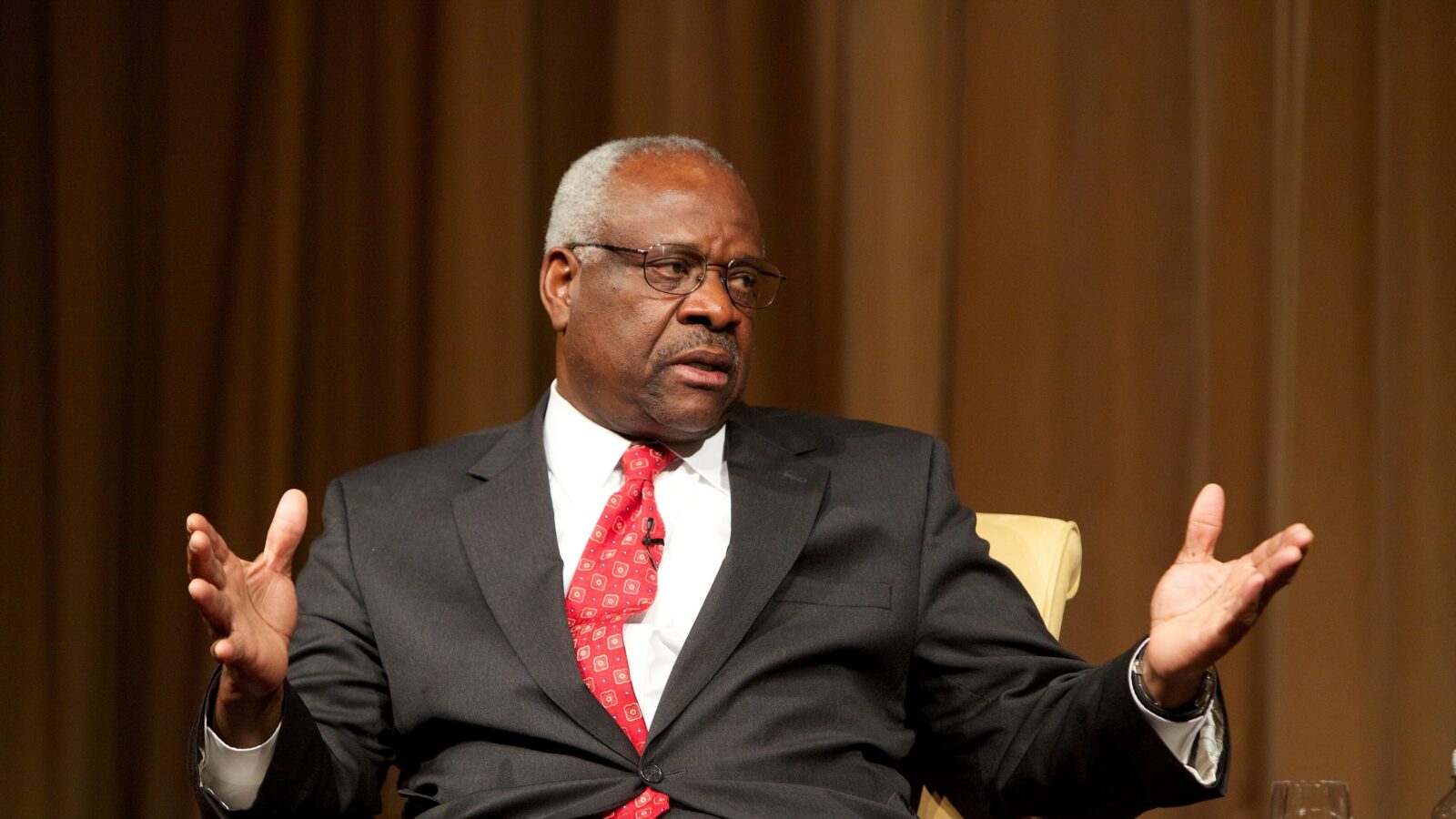
Justice Clarence Thomas just issued a warning every American needs to hear
Published at The Christian PostJust in time for America’s 250th birthday, Justice Clarence Thomas has ignited a national conversation about America’s founding principles. Christians in America should pay special attention because a lot is at stake. Many of the principles under discussion reflect a biblical worldview. Whether we revive or reject them may determine America’s future.
In a recent speech at the University of Texas, Austin, Thomas pointed out that, as important as the Constitution is to our way of life, the ideas of the Declaration of Independence provide the foundation. “The Constitution is the means of government,” explained Thomas. “It is the Declaration that announces the ends of government.”
Thomas went on to say that “the Declaration made it clear in clear prose that the purpose of government is to protect our God-given unalienable rights, rights that all individuals equally possess.”
Over the past 250 years, the importance of the Declaration as the defining document of the American nation has been recognized even by many outsiders. After visiting America in the 1920s, the great English writer G.K. Chesterton wrote: “America is the only nation in the world that is founded on a creed. That creed is set forth with dogmatic and even theological lucidity in the Declaration of Independence; perhaps the only piece of practical politics that is also theoretical politics and also great literature.”
Many Americans are apt to miss the full significance of Chesterton’s observation. Throughout human history, nations have defined themselves primarily by ethnicity, geography, or religion. Americans do share some of those traditional ties. Most of its initial settlers were from England and Europe, and most of them identified as Christians.
Nevertheless, America has defined itself since July 4, 1776, largely by a commitment to a common set of ideas expressed by the Declaration of Independence. The Declaration encapsulates those ideas in 55 words that have become some of the most famous in the English language: “We hold these truths to be self-evident, that all men are created equal, that they are endowed by their Creator with certain unalienable Rights, that among these are Life, Liberty and the pursuit of Happiness. That to secure these rights, Governments are instituted among Men, deriving their just powers from the consent of the governed.”
Drawing on the biblical tradition, these ideas were framed as universal principles applicable to all people everywhere.
Unfortunately, as our nation prepares to celebrate the 250th anniversary of the Declaration in July, many Americans are unsure or confused about its claims.
According to a recent nationwide survey I oversaw, most Americans continue to believe all human beings are created equal. But they are divided over what this claim means.
The Founders believed we were all, in the words of John Adams, “made by the same God.” Only 63% of Americans today share the same view.
The Founders thought all humans possessed the same rights. Only 55% of Americans currently believe “all humans have equal rights.”
The Founders believed that all humans are fallible and corruptible. Only 48% of Americans today say that “all humans are fallible or sinful.”
Most Founders believed that human identity will survive death. Only 38% of Americans currently believe that “all humans have a soul that survives death.”
America’s Founders also believed that our fundamental rights are endowed by our Creator, not government. Because our rights do not come from government, they cannot rightfully be taken away by government.
Express that view today, and you will likely find yourself in hot water.
Last year, U.S. Senator Tim Kaine insisted that the idea that rights “don’t come from the government, but come from the Creator” is something that, apparently, only “the Iranian government believes.” Many Americans apparently agree with him: Less than four in 10 Americans currently believe our rights come from God.
Even many Christians today reject the Founders’ view of the source of our rights. Only 42% of Catholics believe our rights come from God, and only a bare majority (52%) of Protestants and other Christians accept the Founders’ view.
Perhaps these issues seem abstract and have little practical significance. That is far from the case.
Societies that do not believe human beings are fundamentally equal have caste systems or worse. In the American South, the Declaration of Independence’s proclamation of equality was repudiated in order to uphold slavery and then Jim Crow.
Societies that do not think their rights come from God end up having no hard limits on government power or government intrusions into the Church, the family, and the economy.
Societies that do not think that all human beings — including government officials — are sinful, inspire movements that grant absolute power to tyrants in the hope of creating Heaven on earth. They produce the French Revolution, the Russian Revolution, and Mao’s China — not the American Revolution.
Justice Thomas is right to call us back to our Founding principles, principles that are congruent with the teachings of the Bible.
But as he pointed out, it’s not enough merely to celebrate the Declaration. We need to uphold it “by standing up for it, by defending it, and by recommitting [our]selves to living up to its ideas.”
Serious words to ponder as we approach our nation’s 250th birthday.