William A. Dembski

Founding and Senior Fellow, Center for Science and Culture, Distinguished Fellow, Walter Bradley Center for Natural and Artificial Intelligence

A noted mathematician and philosopher, William A. Dembski is a Founding and Senior Fellow with Discovery Institute’s Center for Science and Culture and a Distinguished Fellow with the Institute’s Walter Bradley Center for Natural and Artificial Intelligence. His most recent books relating to intelligent design include Being as Communion: A Metaphysics of Information (2014), Evolutionary Informatics (2017, co-authored with Robert Marks and Winston Ewert), and the second edition of The Design Inference (2023, co-authored with Winston Ewert).

Dr. Dembski has taught at Northwestern University, the University of Notre Dame, the University of Dallas, and Southwestern Seminary. He has done postdoctoral work in mathematics at MIT, in physics at the University of Chicago, and in computer science at Princeton University. Dr. Dembski was previously an Associate Research Professor in the Conceptual Foundations of Science at Baylor University, where he headed the first intelligent design think-tank at a major research university: The Michael Polanyi Center.

Dr. Dembski is a graduate of the University of Illinois at Chicago, where he earned a bachelor’s in psychology and a doctorate in philosophy. He also received a doctorate in mathematics from the University of Chicago in 1988 and a master of divinity degree from Princeton Theological Seminary in 1996. He has held National Science Foundation graduate and postdoctoral fellowships.

Dr. Dembski has published in the peer-reviewed mathematics, engineering, biology, philosophy, and theology literature. He is the author/editor of more than 25 books. In The Design Inference: Eliminating Chance Through Small Probabilities (Cambridge University Press, 1998), he examined the design argument in a post-Darwinian context and analyzed the connections linking chance, probability, and intelligent causation. The greatly expanded second edition of that book also critiques naturalistic accounts of evolution.

Dr. Dembski has edited several influential anthologies, including The Comprehensive Guide to Science and Faith (Harvest, 2021, co-edited with Casey Luskin and Joseph Holden), Biological Information: New Perspectives (World Scientific, 2013, co-edited with Robert Marks, Michael Behe, Bruce Gordon, and John Sanford), The Nature of Nature: Examining the Role of Naturalism in Science (ISI, 2011, co-edited with Bruce Gordon), Uncommon Dissent: Intellectuals Who Find Darwinism Unconvincing (ISI, 2004) and Debating Design: From Darwin to DNA (Cambridge University Press, 2004, co-edited with Michael Ruse).

As interest in intelligent design has grown in the wider culture, Dr. Dembski has assumed the role of public intellectual. In addition to lecturing around the world at colleges and universities, he has appeared on radio and television. His work has been cited in newspaper and magazine articles, including three front page stories in the New York Times as well as the August 15, 2005 Time magazine cover story on intelligent design. He has appeared on the BBC, NPR (Diane Rehm, etc.), PBS (Inside the Law with Jack Ford; Uncommon Knowledge with Peter Robinson), CSPAN2, CNN, Fox News, ABC Nightline, and The Daily Show with Jon Stewart.

Archives

Irreducible Intelligence: The Ultimate Origin of Biological Information

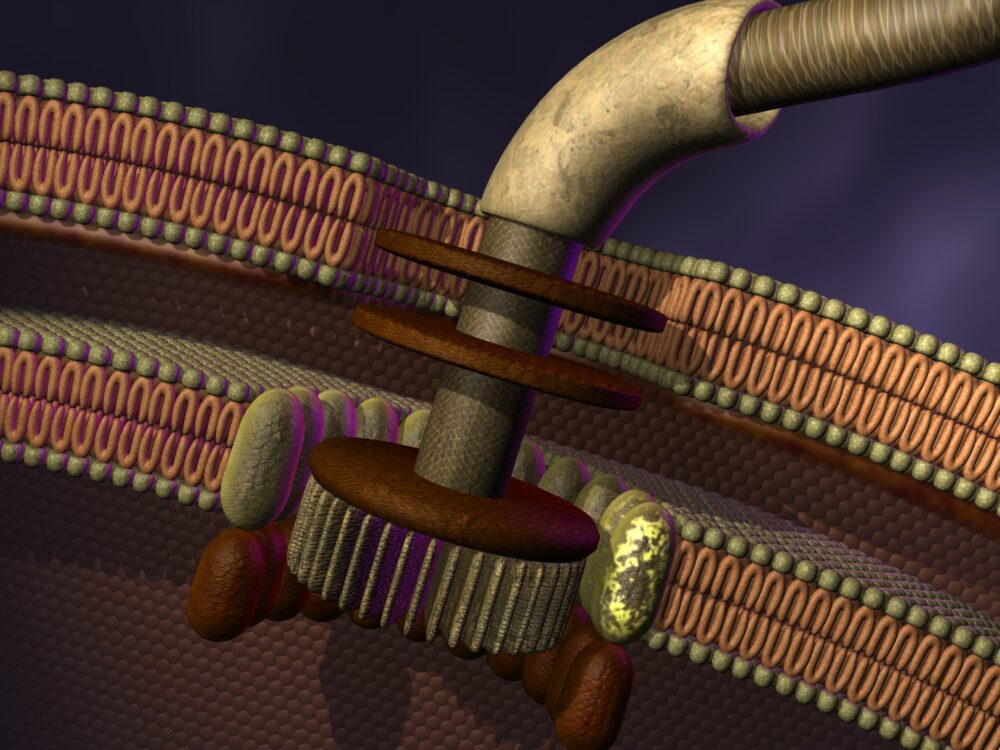
What is the ultimate origin of the information that powers life and the universe? For materialists, matter and energy are the fundamental stuff of life, but an even more crucial element is missing from that equation: information. And as our parents likely reminded us, you don't get anything in this life for free. On this ID The Future, host Andrew McDiarmid concludes his four-part conversation with mathematician and philosopher Dr. William Dembski about his work on the law of conservation of information and how it can help us critically evaluate scientific theories of origins. In this final segment, Dembski explains the ultimate origin of information: what he calls irreducible intelligence. Don't miss other segments of this conversation in separate episodes!

Applying Information Conservation to Biological Origins

Nothing's free in life. It's a sobering reality we all come to realize in life. And this cold, hard truth also applies to the realm of biology. On today's ID The Future, host Andrew McDiarmid continues his four-part discussion with mathematician and philosopher Dr. William Dembski. The topic is Dembski's work on the law of conservation of information, a principle asserting that information within a search process is redistributed from pre-existing sources rather than materializing from nothing. In addition to being used in computer science and physics, the law can also be applied to theories of biological origins to evaluate which theory best comports with the reality that all information comes with a cost, and that cost must be adequately explained. This is Part 3 of a four-part conversation.

Why Intelligence is Necessary to Explain Nature’s Functional Information

We already have a well-established law that shows us how order can decrease in a physical system. But is there a law that explains an increase in order? Scientists have been looking for "nature's missing law" for a while, and while they might be asking the right questions, their training in a bottom-up reductionist framework is leading them to the wrong answers. On this ID The Future, mathematician and philosopher Dr. William Dembski continues a four-part conversation with host Andrew McDiarmid about his work on the law of conservation of information and its implications for theories that attempt to explain the origin of life and the universe. This is Part 2 of a four-part conversation.

Bill Dembski Reveals the Hidden Cost of Information

Chances are you’re already familiar with specified complexity, one of the mathematical pillars of the theory of intelligent design. There’s another pillar that is much less well known but equally vital: the law of conservation of information. On this ID The Future, host Andrew McDiarmid begins a four-part conversation with mathematician and philosopher Dr. William Dembski. The conversation unpacks Dembski’s work on the law of conservation of information and its implications for scientific theories like Darwinian evolution. In Part 1, Dr. Dembski begins by defining information fundamentally as the narrowing of possibilities, where specifying one outcome excludes others. Using his a simple analogy of location, he explains that identifying a specific place, like the town of

Anti-AI Absolutism

My take on the AI situation v Doug Smith
Doug Smith has for some time now been calling attention to destructive effects of digital technologies on people, especially the young.

What We Can Learn About Schooling From Baseball

In Part 3, drawing on my experience as a baseball coach, I offer a somewhat different approach to using AI in education
Edify kids, don’t enhance them. We are organic beings, not gadgets to be improved with newer and better modules (like the newest computer chips).

How AI Could Create Vast Increases in Learning Efficiency

Part 2: Artificial intelligence is promising to fundamentally transform education, leading to vast increases in efficiency of learning
Alpha School students are said to advance an average of 2.6× faster than peers on nationally normed MAP (Measures of Academic Progress) tests and frequently score in the 99th percentile.

A Non-Transhumanist Vision for AI in Education

Bill Dembski describes this new approach as amounting to edification rather than enhancement
AI should be used as a way of honing students’ skills and knowledge, helping them learn more effectively than before.

Bill Dembski: Pursuing Truth and Trust in AI and LLMs

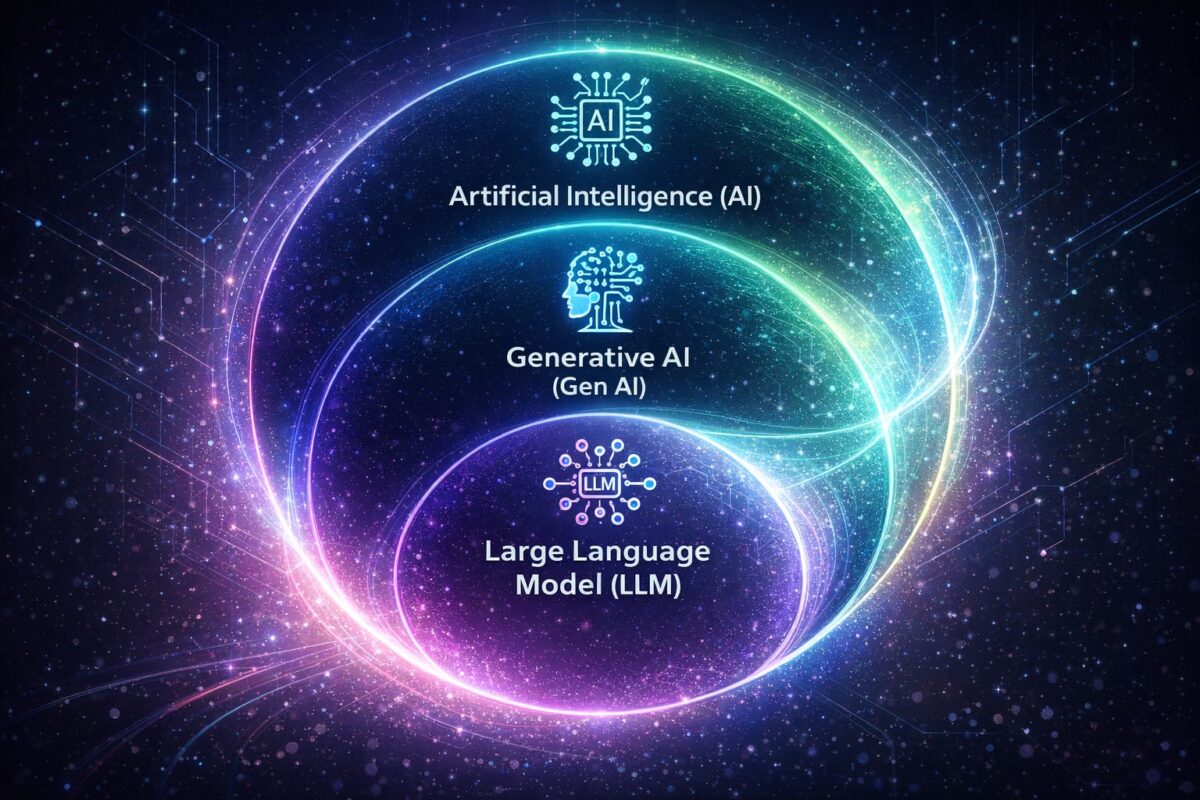
How does AI stack up when it comes to accurately representing the theory of intelligent design? Today, host Andrew McDiarmid speaks with mathematician and philosopher Dr. William Dembski about the reliability and accuracy of large language models (LLMs) like ChatGPT and Bard, particularly concerning intelligent design. This second half of the conversation highlights the importance of independent verification when using AI, as LLMs can “hallucinate” or generate false or biased information. Dembski advises an approach of verify, then trust, turning the old Russian proverb on its head. McDiarmid and Dembski also explore the potential for AI to enhance human capabilities and education if used judiciously, rather than becoming a crutch that erodes critical thinking. But that

Can AI Accurately Portray Intelligent Design?

How accurately do AI models like ChatGPT, Grok, and Bard portray the theory of intelligent design? Can large language models rise above the biases of sources like Wikipedia to help level the playing field for intelligent design? Today, host Andrew McDiarmid begins a conversation with mathematician and philosopher Dr. William Dembski to address the relationship between AI and ID. In recent years, Dr. Dembski has been putting LLMs through their paces to see if they can accurately and fairly discuss and portray intelligent design arguments and concepts. Here, Dembski discusses what he discovered as he used various methods to interrogate these complex algorithms. This is Part 1 of a two-part conversation. Look for Part 2 in a separate episode.