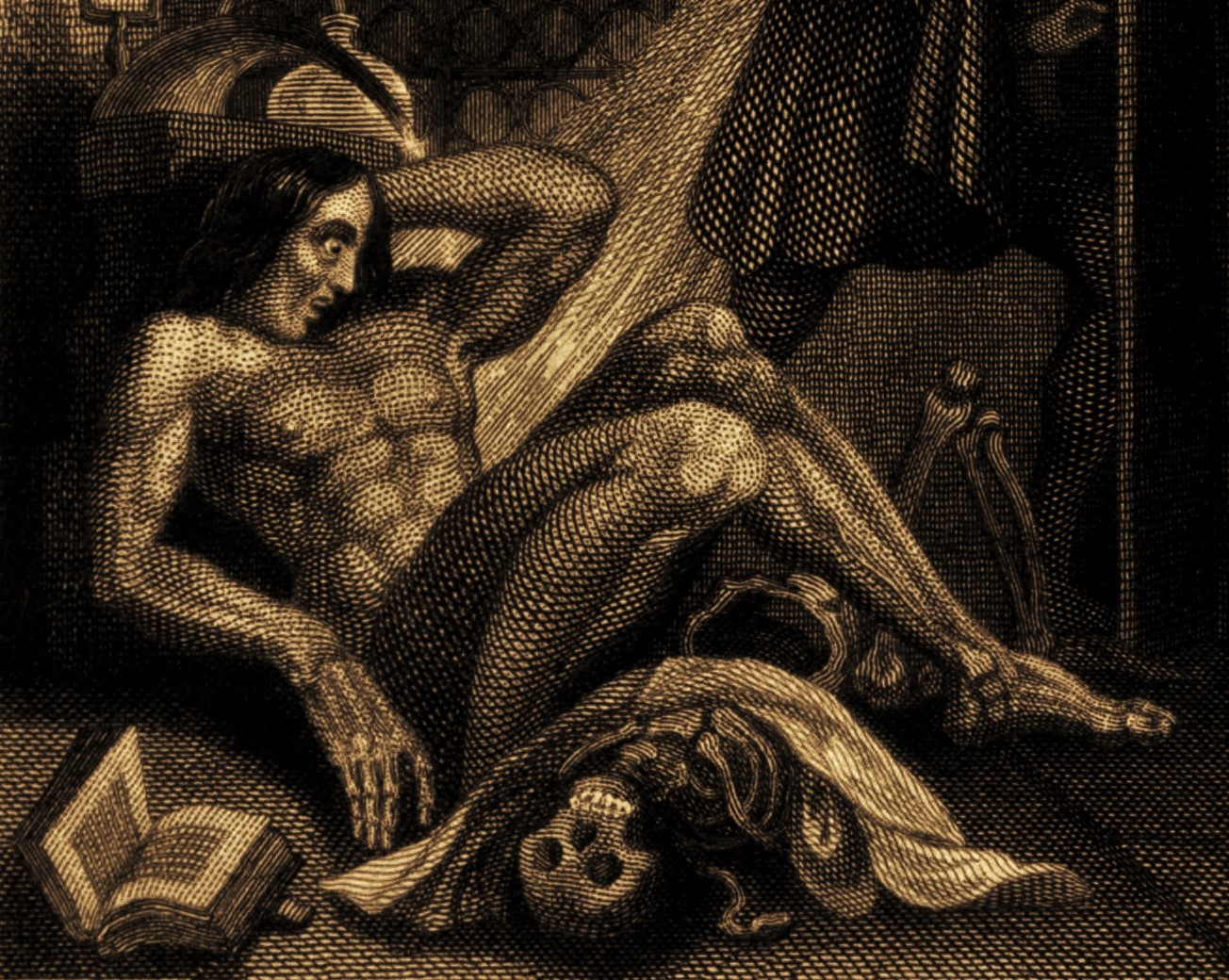
FrankensteinortheModernPrometheusRevisedEdition183
Public domain image from Wikimedia Commons: https://commons.wikimedia.org/wiki/File:Frankenstein,_or_the_Modern_Prometheus_(Revised_Edition,_1831)_Creature.jpg
Share
Facebook
Twitter/X
LinkedIn
Flipboard
Print
Email

Scientists Creating “Artificial Life” in Their Labs Promise World-Changing Benefits — but Are They Playing God?

Originally published at New York Post

In “Frankenstein,” a living monster is assembled from scavenged human body parts and leftover animal remains. Throw together some chemicals, zap it with lightning, and voilà — it’s alive!

In the real world, building life is infinitely more complicated, but harnessing life’s existing machinery might be key to solving many of our miseries.

Scientists recently buzzed over SpudCell, a “synthetic cell” bioengineered to mimic the functions of living cells. Assembled in the lab from biomolecules such as proteins, lipids and DNA, SpudCell promises many potential therapeutic benefits.

But are we, like Dr. Frankenstein, playing God?

Continue Reading at New York Post

Casey Luskin

Associate Director, Research Director, and Senior Fellow, Center for Science and Culture
Casey Luskin is a geologist and an attorney with graduate degrees in science and law, giving him expertise in both the scientific and legal dimensions of the debate over evolution. He earned his PhD in Geology from the University of Johannesburg, and BS and MS degrees in Earth Sciences from the University of California, San Diego, where he studied evolution extensively at both the graduate and undergraduate levels. His law degree is from the University of San Diego, where he focused his studies on First Amendment law, education law, and environmental law.