Total Truth
In this award-winning book, Nancy Pearcey, a Fellow of the Discovery Institute, presents an analysis of the impact that Darwinism has had upon our culture. Pearcey starts by observing that our culture has separated “truth” into two categories. In the “upper story” is noncognitive experience. This is the realm of private truth which ranges from favorite ice-cream flavors to one’s Read More ›

The Long War Ahead and the Short War Upon Us
The Long War Ahead and the Short War Upon Us, provides an assessment of the successes and failures of the United States’ War on Terror, six years after 9/11. As important, it provides a fresh perspective on how to meet the challenges posed by a war with many fronts in a complex and shifting environment. Mr. Wohlstetter sees two wars Read More ›
Darwin Day in America

Shattered Tablets
Is morality based on some essential truth or is it defined by society? In this highly original critique of American social mores and popular culture, David Klinghoffer argues that the Ten Commandments are essential to maintaining a morally healthy society. With the meticulousness of a scholar, he begins by excavating the meaning of the Commandments. Drawing on the millennia-old rabbinical Read More ›
The Edge of Evolution
When Michael J. Behe’s first book, Darwin’s Black Box, was published in 1996, it launched the intelligent design movement. Critics howled, yet hundreds of thousands of readers and a growing number of scientists were intrigued by Behe’s claim that Darwinism could not explain the complex machinery of the cell. Now, in his long-awaited follow-up, Behe presents far more than a challenge Read More ›
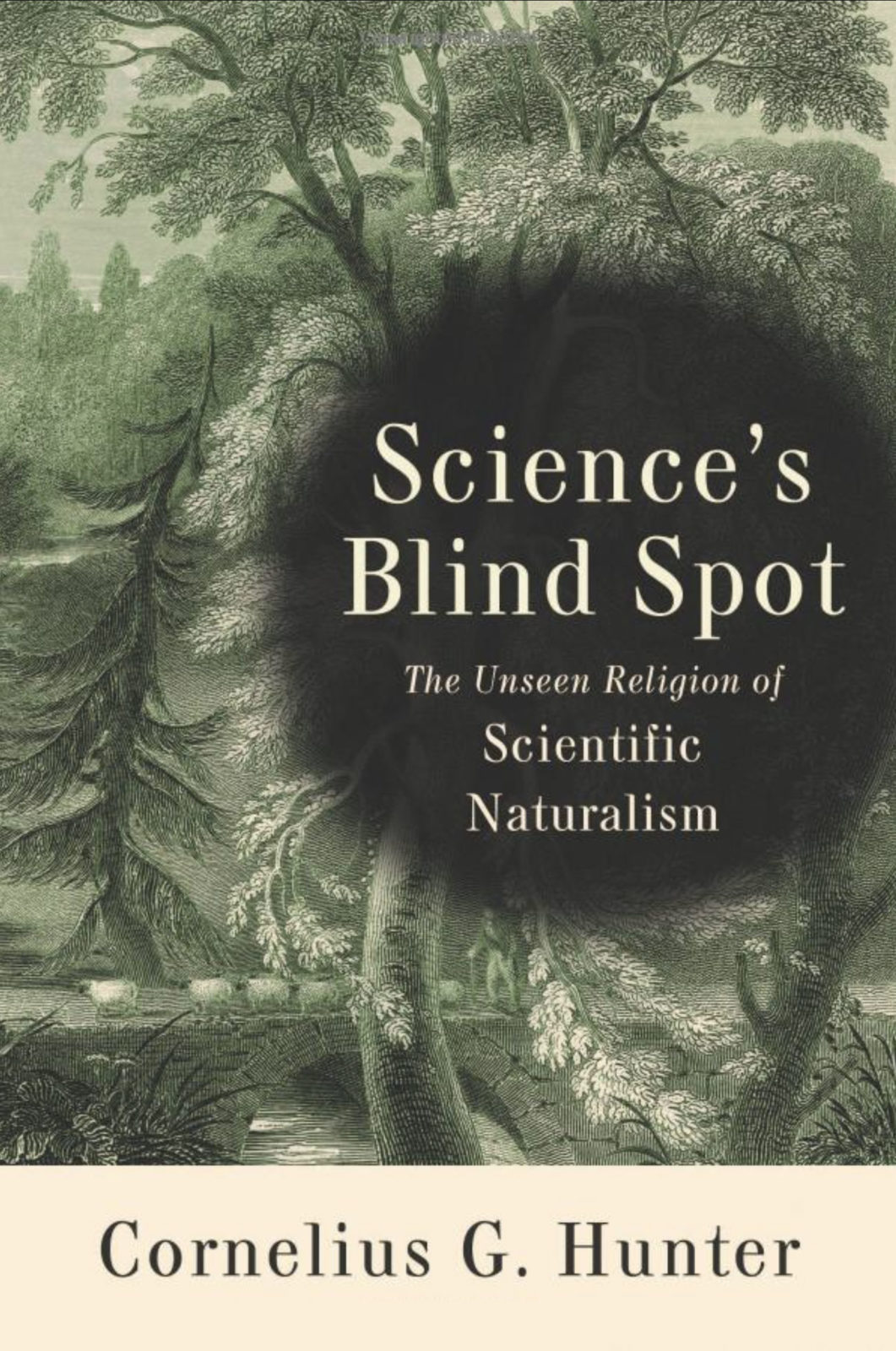
Science’s Blind Spot
Had evolutionists been in charge, they wouldn’t have made the mosquito, planetary orbits would align perfectly, and the human eye would be better designed. But they tend to gloss over their own failed predictions and faulty premises. Naturalists see Darwin’s theories as “logical” and that’s enough. To think otherwise brands you a heretic to all things wise and rational. Science’s Read More ›
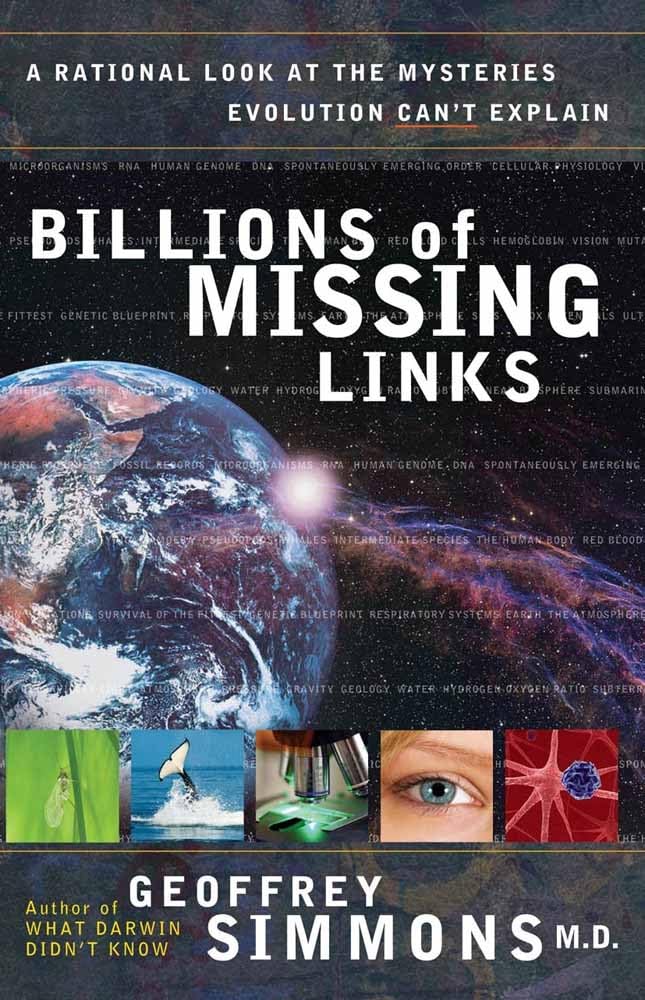
Billions of Missing Links
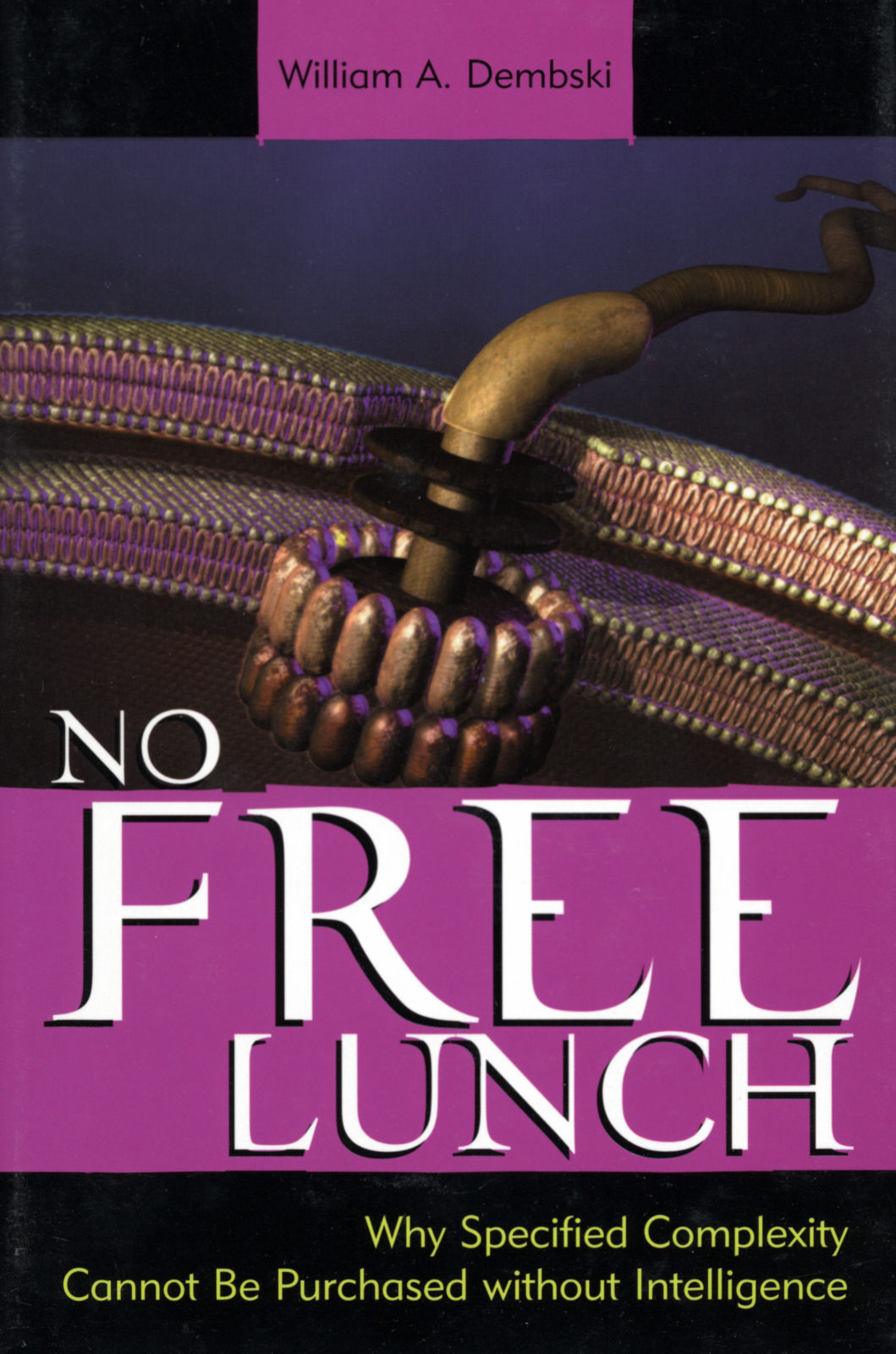
No Free Lunch
No Free Lunch, the sequel to mathematician and philosopher William Dembski's Cambridge University Press book The Design Inference, explores key questions about the origin of specified complexity. Dembski explains that the Darwinian search mechanism of random mutation coupled with natural selection is incapable of generating novel complex, specified information (CSI).
This observation translates into "No Free Lunch" (NFL) theorems, which Dembski explains are inherent constraints upon natural systems. Natural Darwinian mechanisms can shuffle this information around, but only intelligence can generate novel CSI. In other words, when it comes to generating truly novel biological complexity, Darwin can have no free lunch...
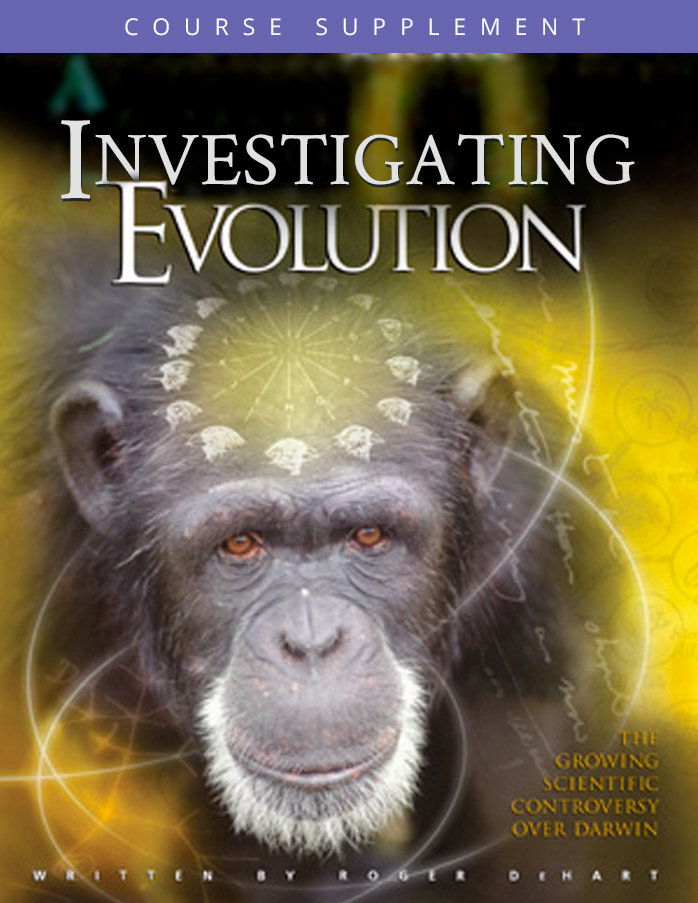
Investigating Evolution
Investigating Evolution is a DVD resource for general biology courses. These short (3-11 minute) videos explore standard topics relating to evolution covered in many biology textbooks. The purpose of each module is to raise thought-provoking scientific questions and facilitate inquiry-based learning. (Note: These modules were adapted from the Icons of Evolution documentary for classroom use and contain additional clips and narration.)
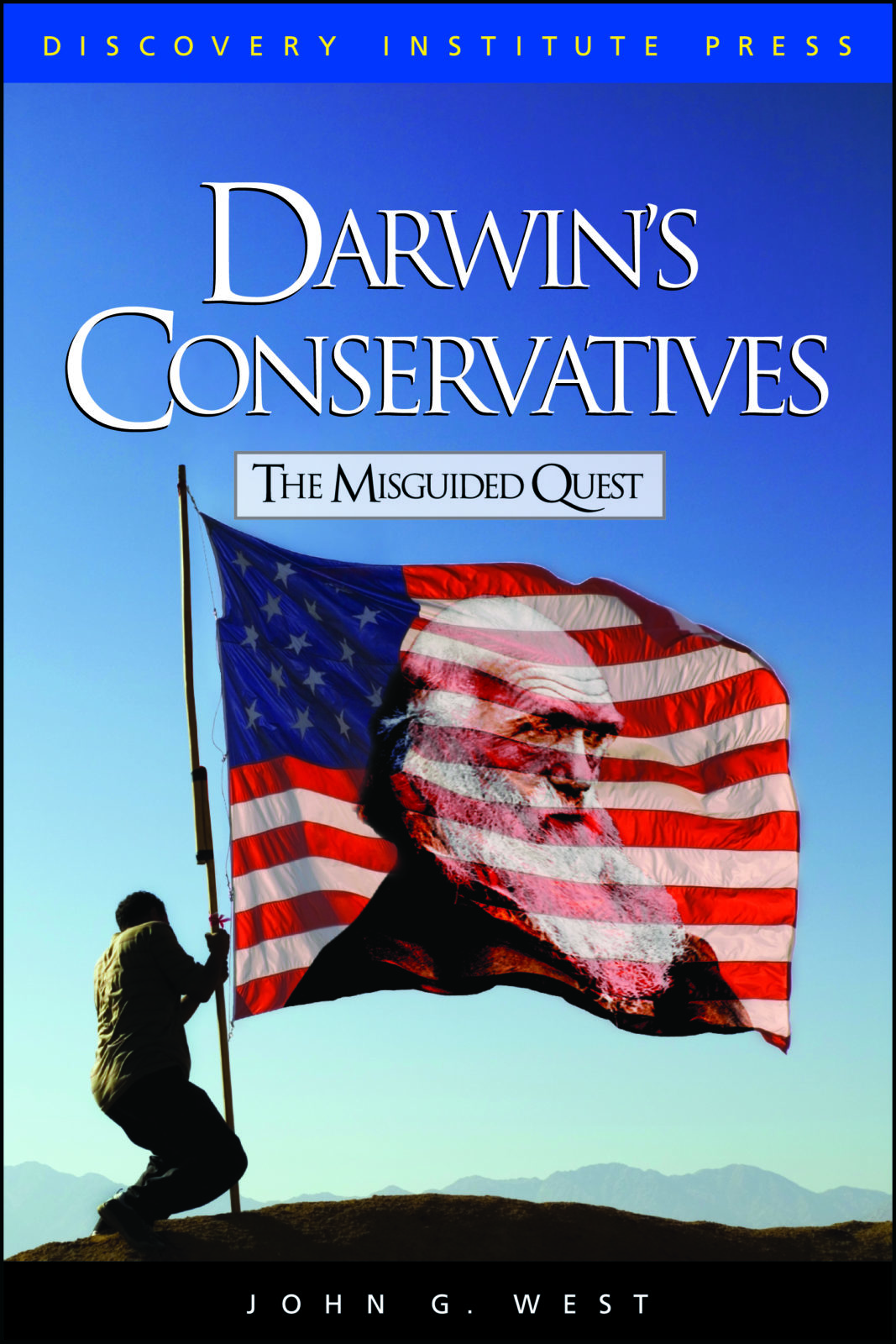
Darwin’s Conservatives
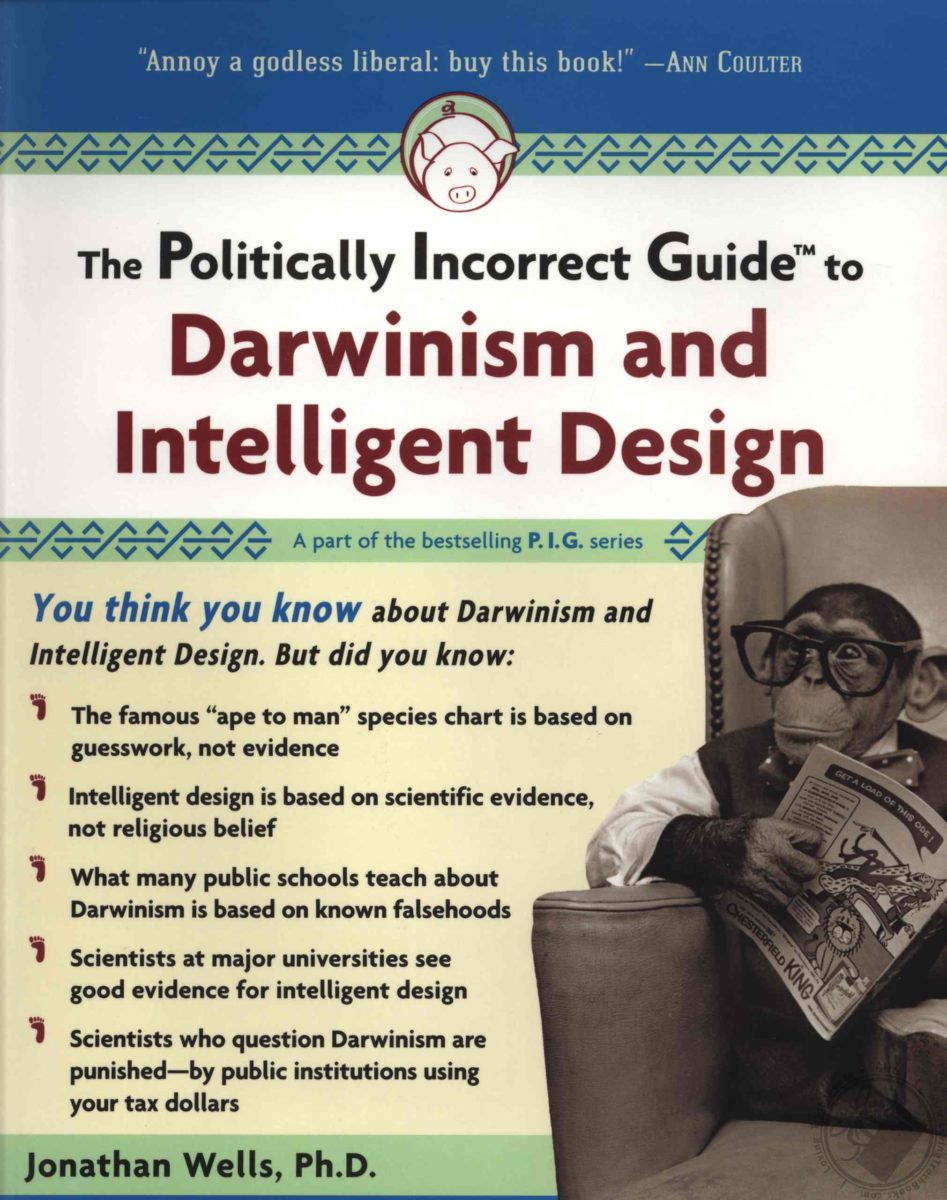
The Politically Incorrect Guide to Darwinism and Intelligent Design
In the 1925 Scopes trial, the American Civil Liberties Union sued to allow the teaching of Darwin’s theory of evolution in public schools. Seventy-five years later, in Kitzmiller v. Dover, the ACLU sued to prevent the teaching of an alternative to Darwin’s theory known as “Intelligent Design” — and won. Why did the ACLU turn from defending the free-speech rights Read More ›
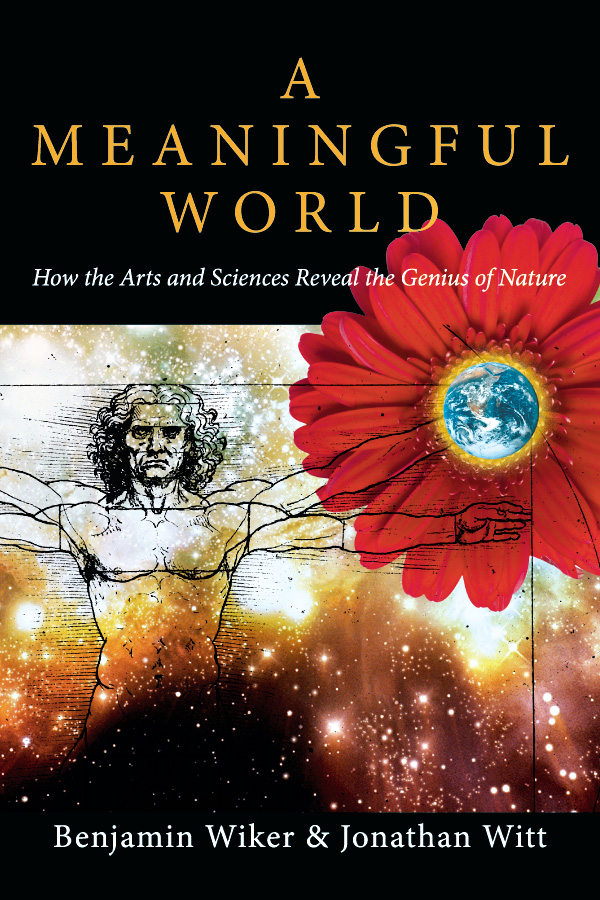
A Meaningful World
Meaningful or meaningless? Purposeful or pointless? When we look at nature, whether at our living earth or into deepest space, what do we find? In stark contrast to contemporary claims that the world is meaningless, Benjamin Wiker and Jonathan Witt reveal a cosmos charged with both meaning and purpose. Their journey begins with Shakespeare and ranges through Euclid’s geometry, the Read More ›
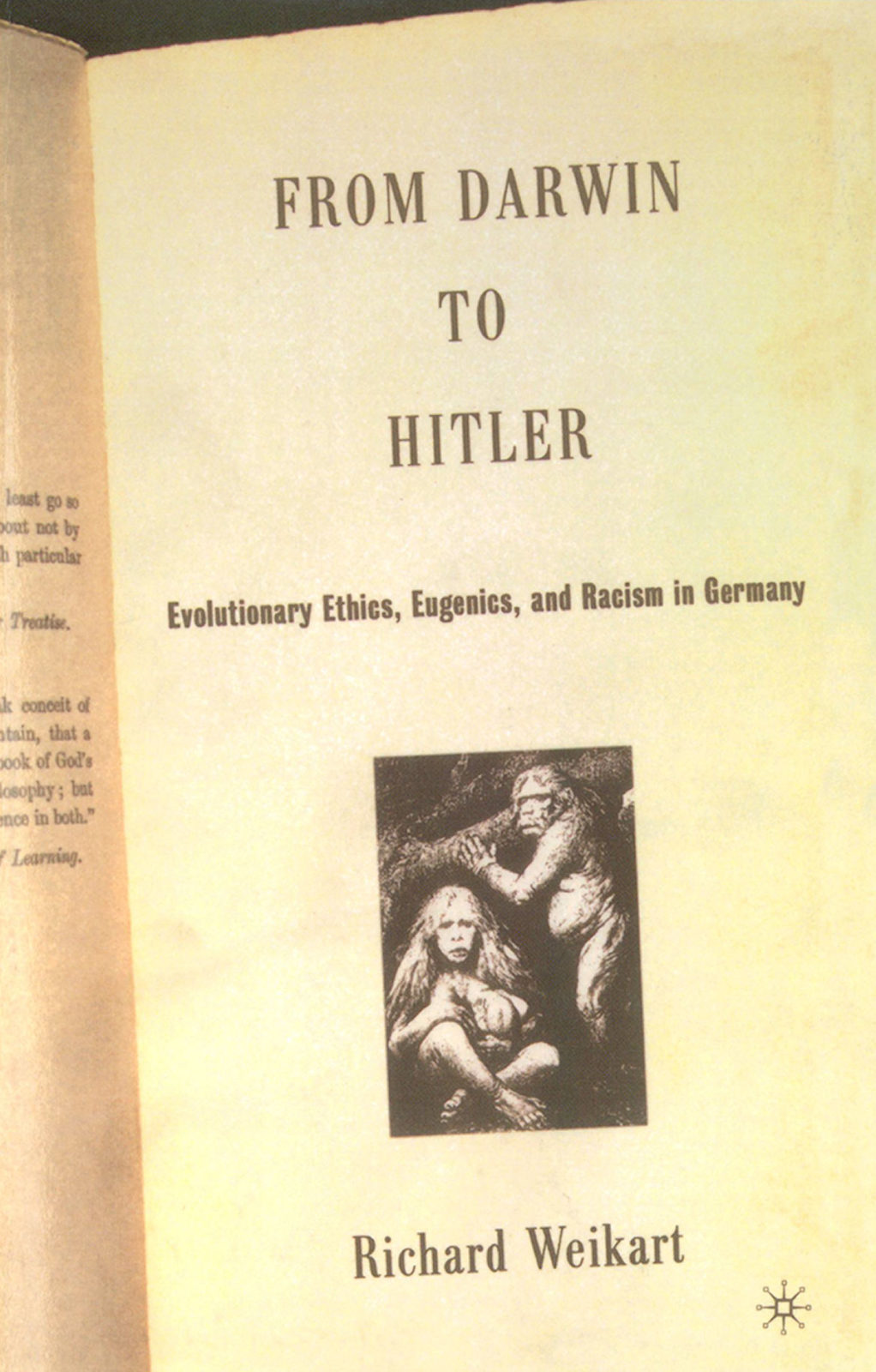
From Darwin to Hitler
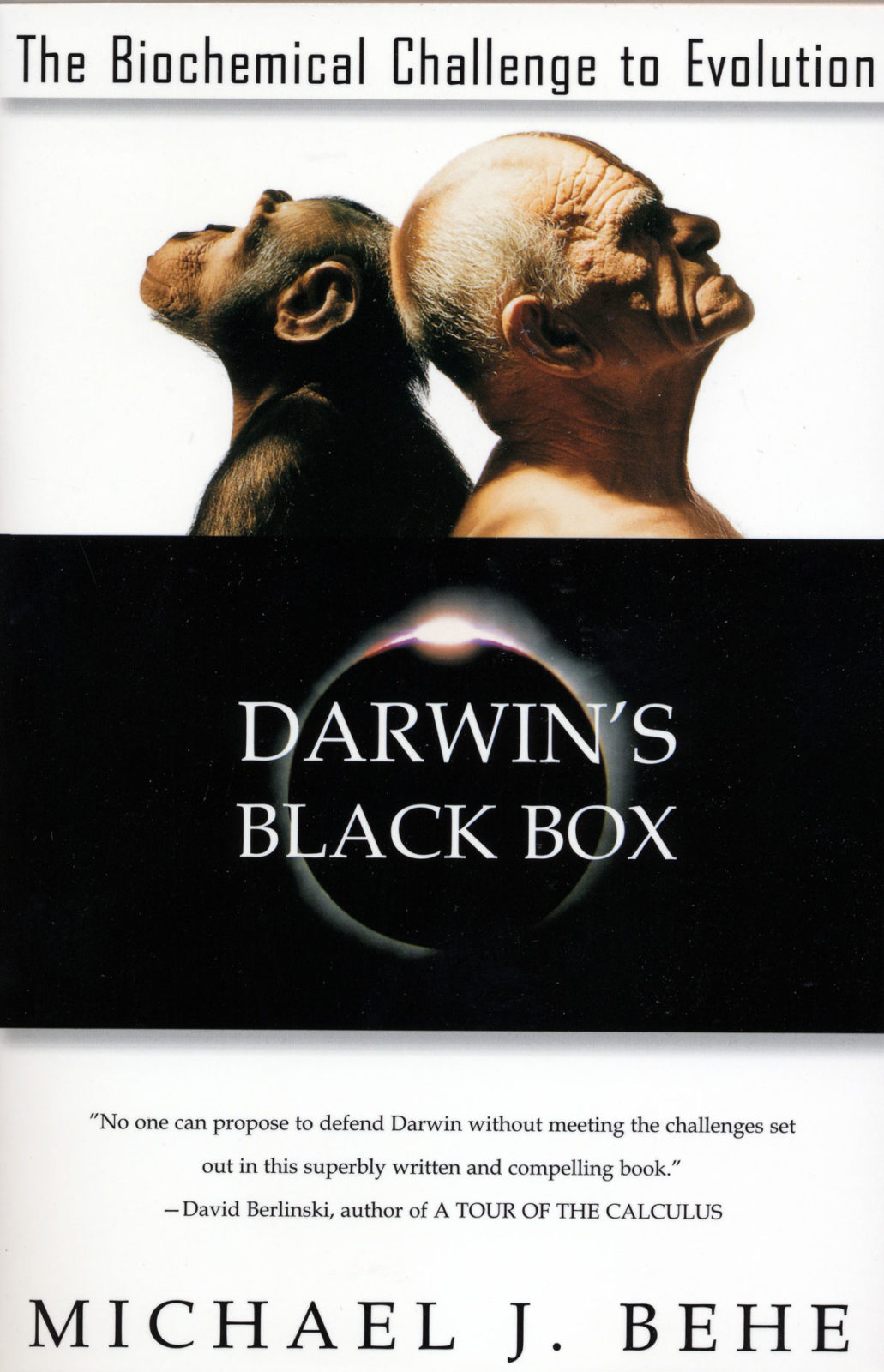
Darwin’s Black Box
In Darwin’s Black Box, Michael Behe argues that evidence of evolution’s limits has been right under our noses, but its undoing is evident at such a small scale that we have only recently been able to see it. The field of biochemistry, begun when Watson and Crick discovered the double-helical shape of DNA, has unlocked the secrets of the cell. There, biochemists have unexpectedly discovered a world of Lilliputian complexity. As Behe engagingly demonstrates, using the examples of vision, bloodclotting, cellular transport, and more, the biochemical world comprises an arsenal of chemical machines, made up of finely calibrated, interdependent parts. For Darwinian evolution to be true, there must have been a series of mutations, each of which produced its own working machine, that led to the complexity we can now see. The more complex and interdependent each machine’s parts are shown to be, the harder it is to defend Darwin’s gradualistic paths. Behe surveys the professional science literature and shows that it is completely silent on the subject, stymied by the elegance of the foundation of life. Could it be that there is some greater force at work?
Read More ›
Traipsing Into Evolution
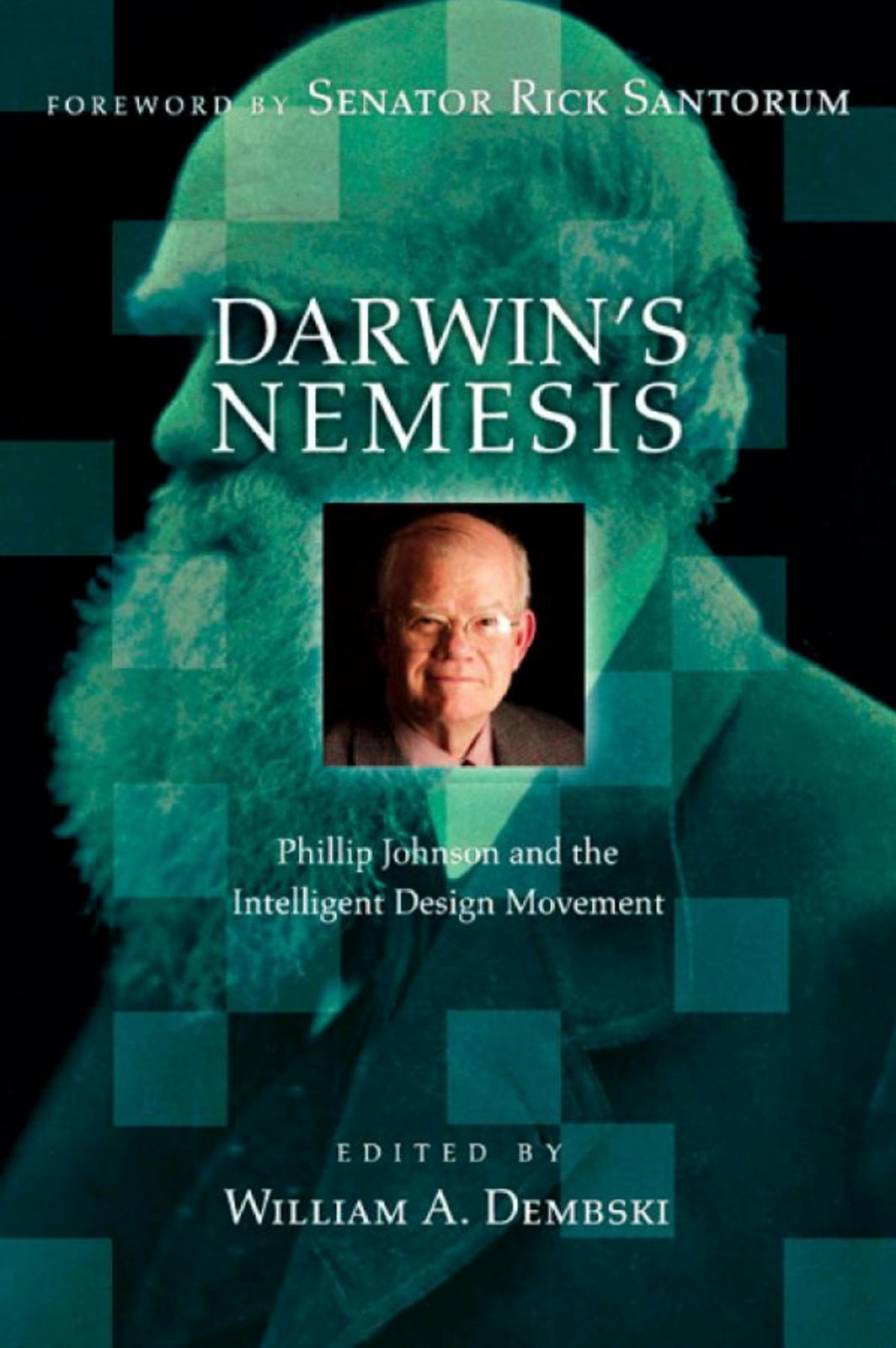
Darwin’s Nemesis
With the publication of Darwin on Trial in 1991, Cal Berkeley legal scholar Phillip Johnson became the leading figure in the intelligent design movement. Exposing and calling into question the philosophical foundations of Darwinism, Johnson led the charge against this largely unquestioned philosophy of materialistic reductionism and its purported basis in scientific research. This book reviews and celebrates the life and thought Read More ›
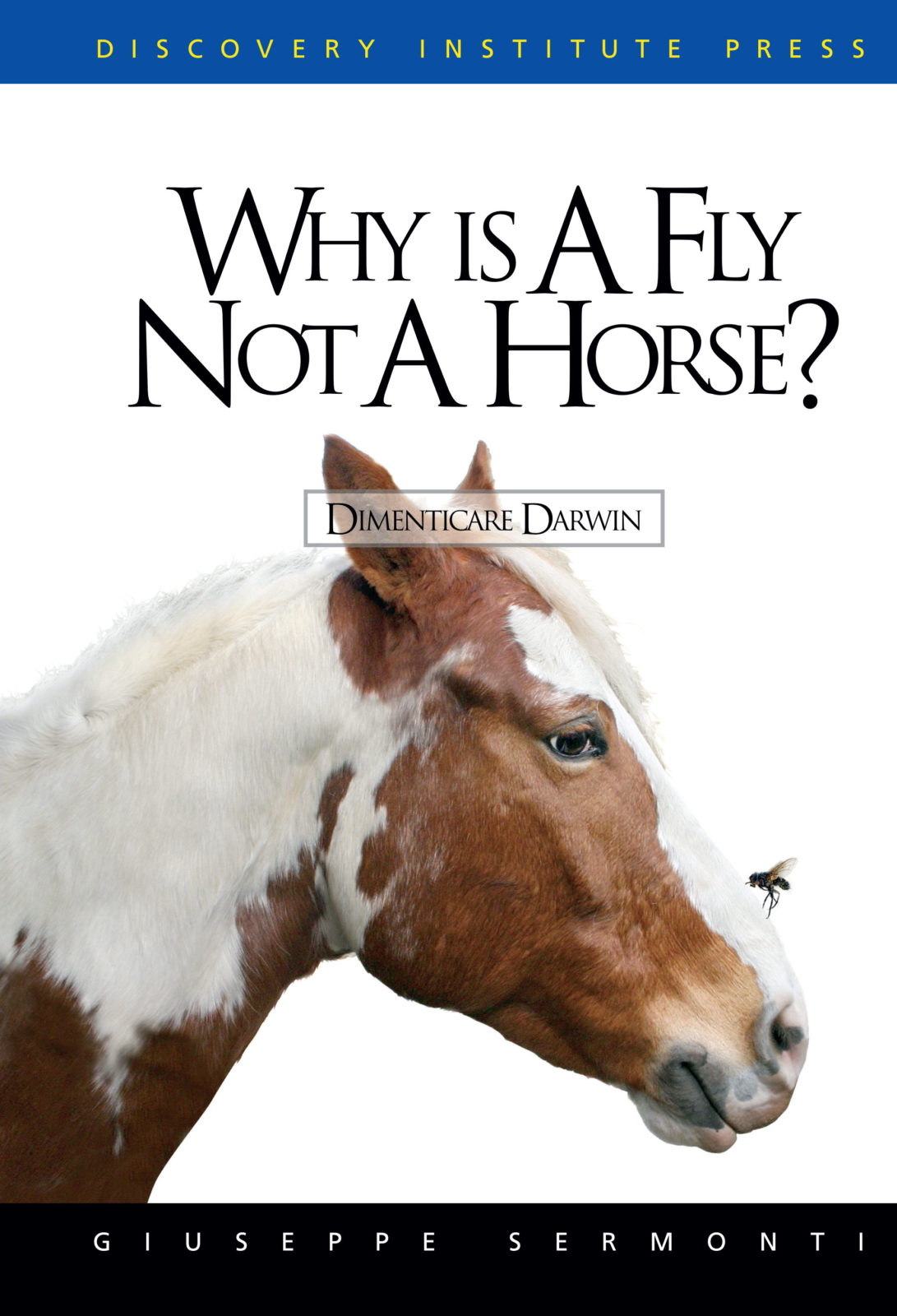
Why Is a Fly Not a Horse?
About the Book In Why Is a Fly Not a Horse?, published by Discovery Institute Press, editor of the prestigious Italian biology journal Rivista di Biologia, Giuseppe Sermonti, explains why evolution resembles a “paradigm” more than it does an explanation. Scientists assume that the theory and its implications (such as universal common descent) are true, but no one can ever explain the Read More ›
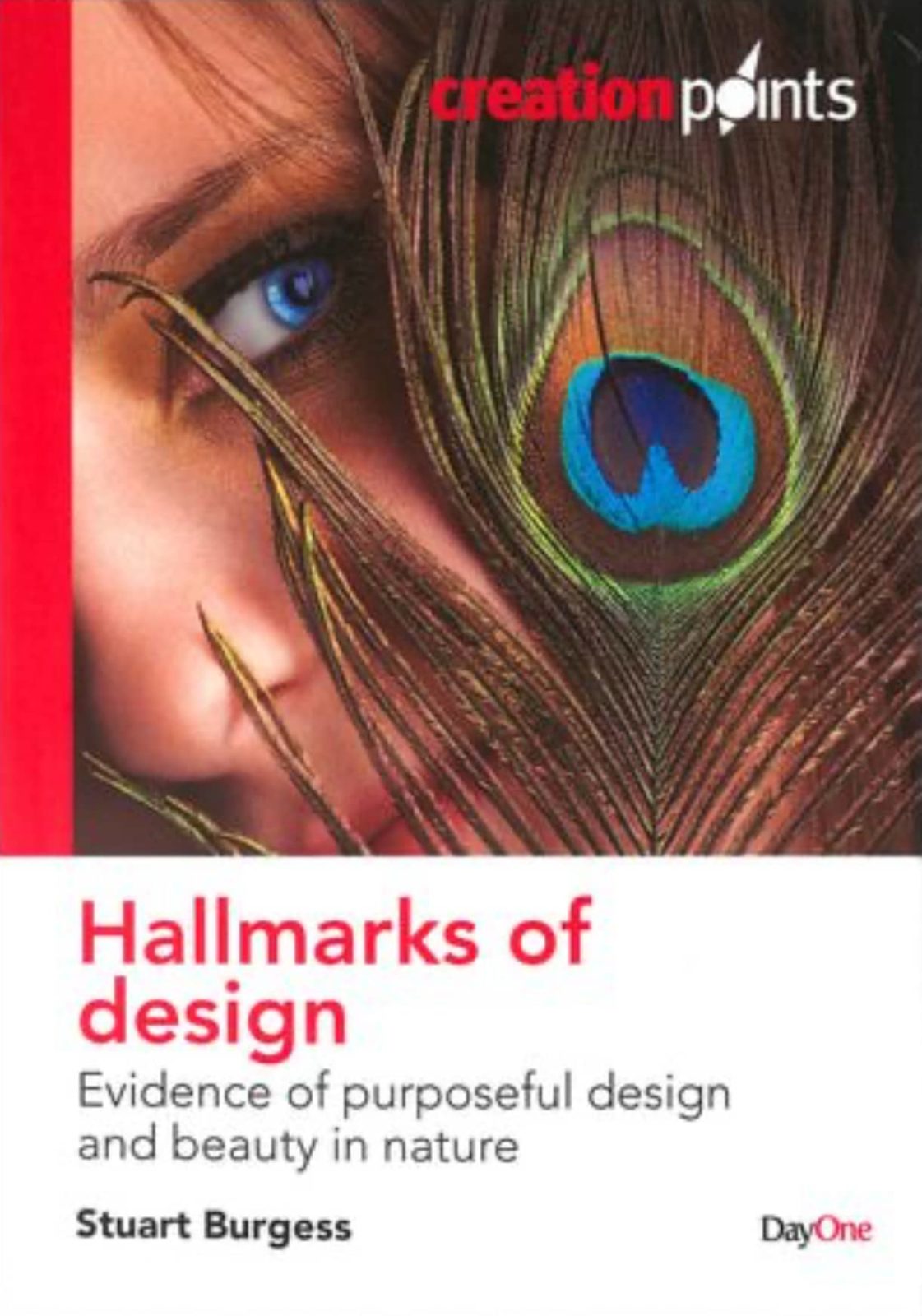
Hallmarks of Design
The Design argument contends that design in nature reveals a Designer. This book presents this in the light of the latest discoveries about the complexity and beauty of the natural world. Plaudits Dr. Stuart Burgess writes in plain, easy-to-understand terms of the complexity and beauty of living creatures all around us. God has placed his hallmark on creation, and it Read More ›
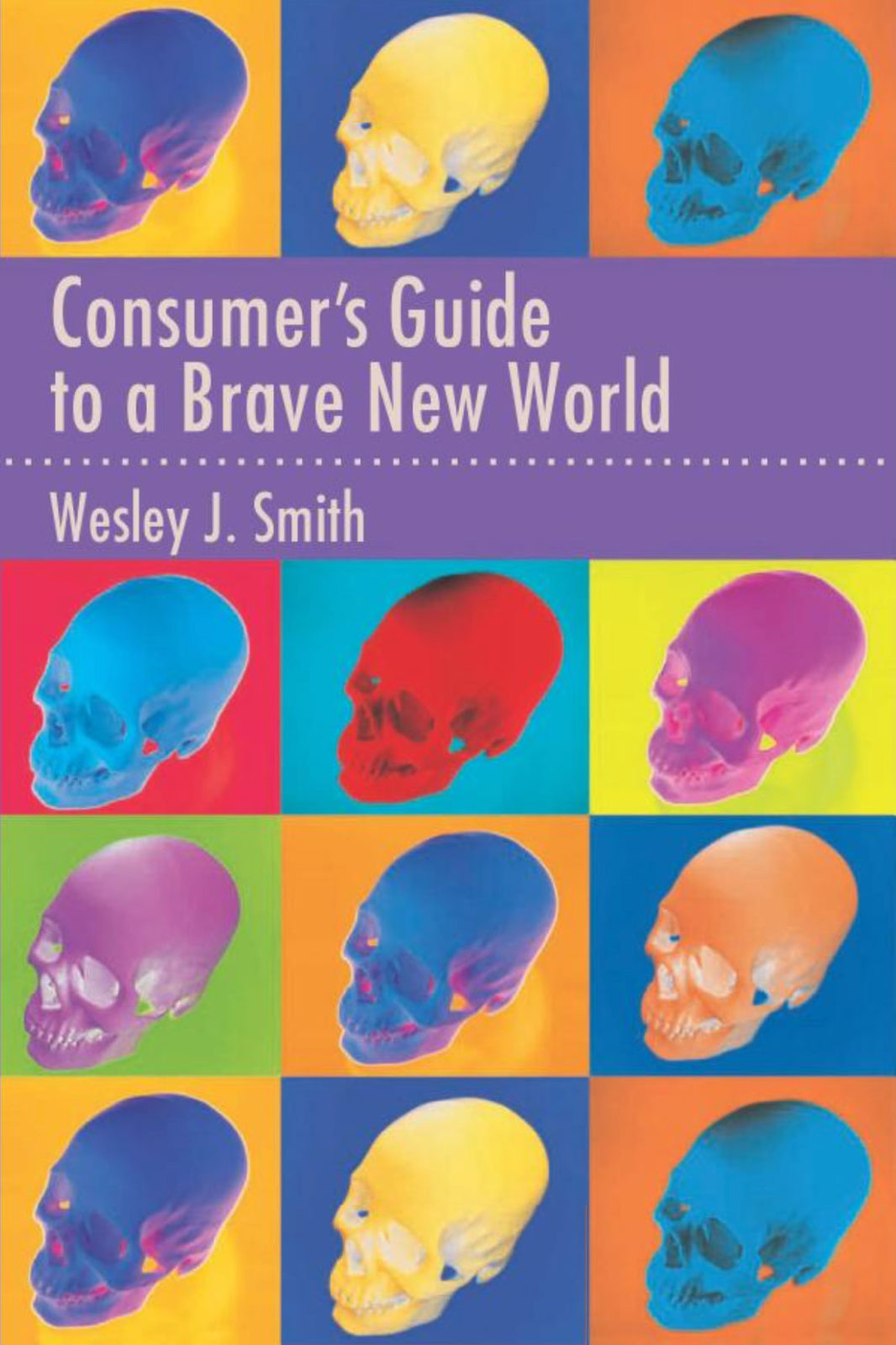
Consumer’s Guide to a Brave New World
In Consumer’s Guide to a Brave New World, Discovery Institute Senior Fellow, attorney, and bioethicist Wesley J. Smith asks the simple but difficult question, “should the importance of human life be sacrificed for the potential advancement of human technology?” So provocative are Smith’s ideas, that his writings have led to a quote on Starbucks coffee cups! Cloning researchers claim to Read More ›